Building a reef tank feels complex at first. It gets easier when you follow a simple plan. This guide covers the core steps that prevent most beginner problems.
Section 1: Plan the tank and choose the right gear
Start with tank size and goals. A 20–40 gallon tank works for soft corals. A 60–90 gallon tank offers more stability. Bigger water volume buffers mistakes. It also slows parameter swings.
Pick equipment that matches your bioload. Use a heater rated at 3–5 watts per gallon. Add a thermometer you can read fast. Choose a return pump that gives 5–10x display turnover per hour. Add powerheads for 20–40x total flow in reef tanks.
Lighting depends on coral type. Soft corals need lower PAR. Many thrive around 50–100 PAR. LPS often like 80–150 PAR. SPS usually need 200–350 PAR. Start low and ramp up over two weeks. This reduces bleaching risk.
Filtration should stay simple. A protein skimmer helps on tanks over 40 gallons. A sump adds volume and hides gear. Use filter socks or floss for particles. Replace them every 2–3 days. Learn more in our saltwater filtration guide.
- Choose a tank stand that supports full weight plus a safety margin.
- Use a GFCI outlet and drip loops on every cord.
- Buy a refractometer and calibrate it with 35 ppt fluid.
Section 2: Mix saltwater, cycle correctly, and set target parameters
Use RO/DI water for mixing salt. Aim for 0 TDS from the unit. Mix salt to 35 ppt, or 1.026 specific gravity. Heat water to 77–79°F before final adjustments. Let it mix with a powerhead for 12–24 hours.
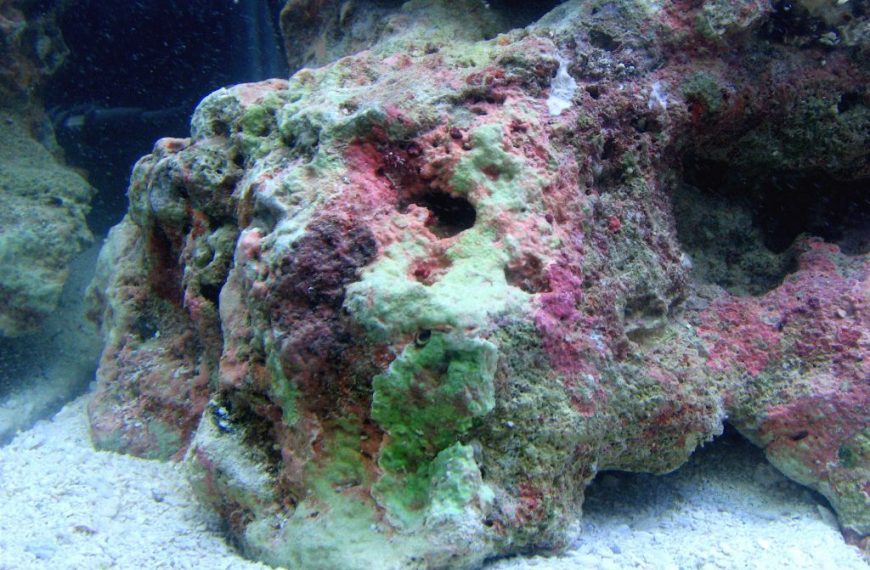
Build your aquascape with stable rock. Keep rock off the glass bottom if possible. Use epoxy or cement for tall structures. Leave space for flow behind the rock. Plan coral placement with growth in mind.
Cycle the tank with an ammonia source. Dose to 1–2 ppm total ammonia nitrogen. Add nitrifying bacteria if you want a faster start. Test ammonia, nitrite, and nitrate every 2–3 days. The cycle is ready when ammonia and nitrite hit zero within 24 hours.
Set stable reef parameters before adding corals. Keep salinity at 35 ppt. Hold temperature at 77–79°F with under 1°F swing. Target alkalinity 8–9 dKH, calcium 400–450 ppm, and magnesium 1250–1400 ppm. Keep nitrate 5–15 ppm and phosphate 0.03–0.10 ppm for many mixed reefs.
- Test salinity weekly, and after every water change.
- Do a 10–15% water change each week in early months.
- Run lights 6 hours at first, then increase to 8–10 hours.
Section 3: Add livestock slowly and avoid common beginner mistakes
Add a cleanup crew after the cycle completes. Start small in new tanks. Try 1–2 snails per 5 gallons. Add more only if algae demand rises. Too many starve in clean tanks.
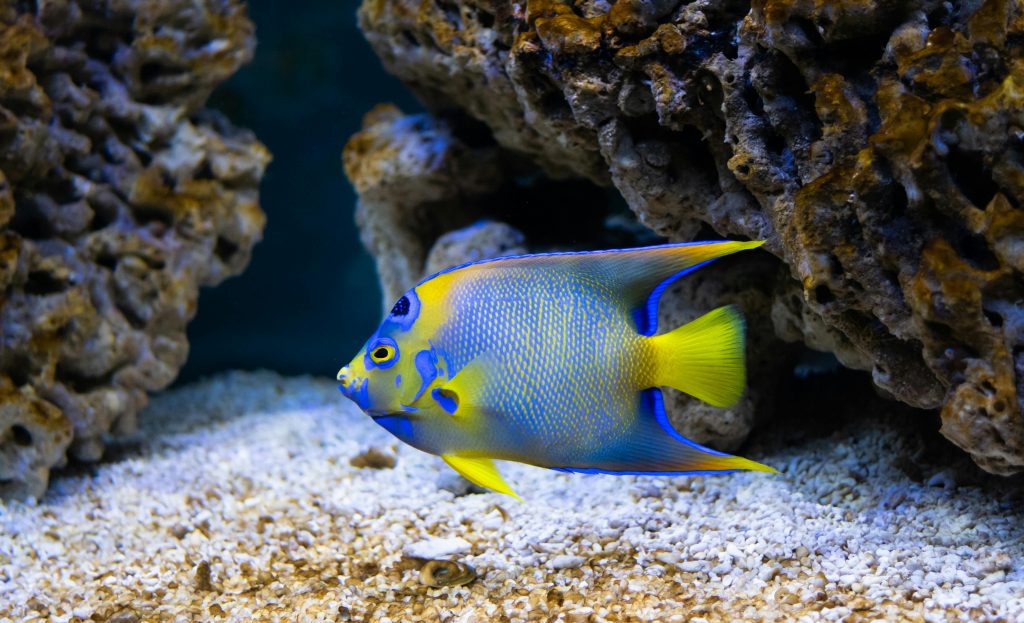
Quarantine fish when you can. A simple 10–20 gallon bare tank works. Observe for 2–4 weeks. Watch for spots, flashing, or heavy breathing. If you skip quarantine, add fish slowly. Add one fish every 2–3 weeks.
Feed with control from day one. Offer small portions once or twice daily. Remove uneaten food after two minutes. Use frozen foods rinsed in RO/DI water. This reduces phosphate spikes. For more detail, see our reef fish feeding schedule.
Troubleshoot early warning signs. Brown diatoms are normal in week two or three. Cyanobacteria often points to low flow or high nutrients. Raise flow and reduce feeding for seven days. If alkalinity swings, stop chasing numbers daily. Dose only after three days of consistent testing. Our reef water parameters guide can help you set a routine.
- Do not add corals until nitrate and phosphate are measurable and stable.
- Do not clean rock too aggressively during the first algae phases.
- Do not change salt brands and dosing plans in the same week.
Reef tank setup basics come down to stability and patience. Choose gear that fits your goals. Cycle fully, then stock slowly with steady testing. Your reef will reward consistent habits over quick fixes.
Sources: Randy Holmes-Farley, “Reef Aquarium Water Parameters” (Advanced Aquarist); Craig Bingman, “The Relationship Between Alkalinity and pH” (aquarium chemistry articles); Julian Sprung, The Reef Aquarium (reef husbandry reference).
 By
By