
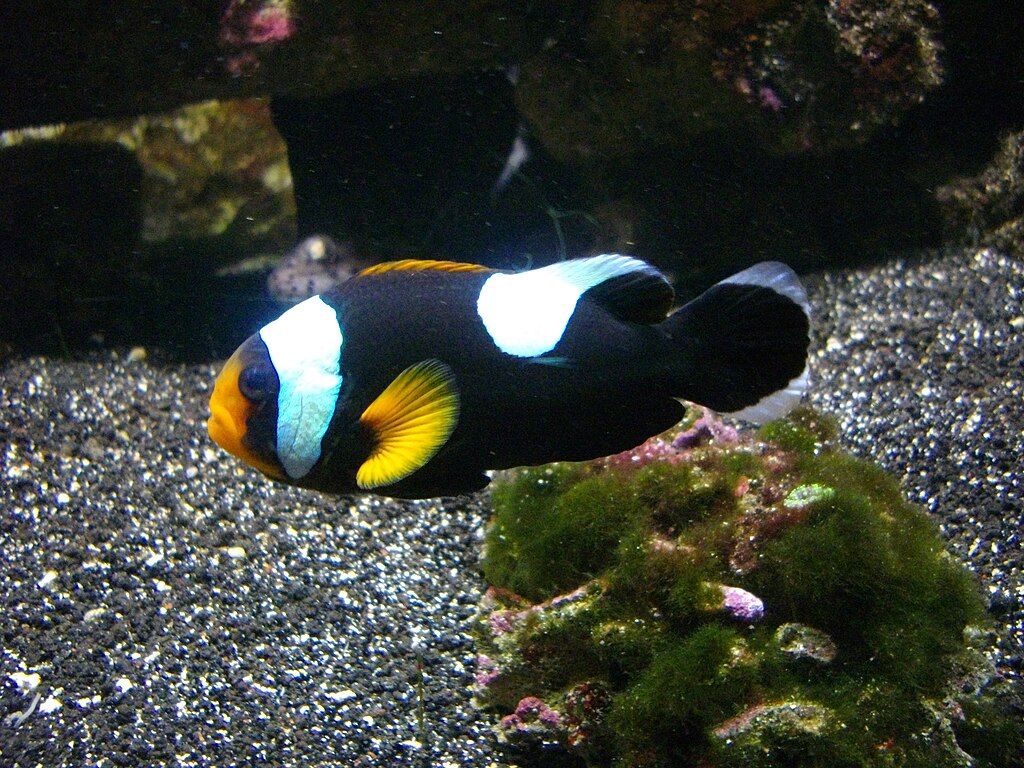
Saddleback Clownfish (Amphiprion polymnus): A Characterful Beginner Clown
The Saddleback Clownfish, Amphiprion polymnus, is a bold, eye‑catching clownfish known for its unique “saddle” marking across the back. For saltwater hobbyists, it offers the personality of a clownfish with a slightly wilder look than the common Ocellaris. With the right tank mates and conditions, this species can be a hardy, rewarding addition to your reef or fish‑only system.
Appearance, Personality, and Natural Behavior
Saddleback Clownfish are instantly recognizable. Their bodies are usually dark brown to black with two white bands: one behind the head and a wide, saddle‑shaped patch over the mid‑section. Some variants have orange faces or yellowish fins, depending on collection location.
In the wild, they are often found hosting in carpet anemones over sandy bottoms. In aquariums, they may accept a variety of hosts or choose to live among rockwork and corals instead.
Temperament and Compatibility
- Temperament: Semi‑aggressive, especially once paired and established.
- Best kept as: A single individual or a bonded pair.
- Tank mates: Peaceful to moderately assertive fish that are not easily bullied.
They are generally more territorial than Ocellaris or Percula clowns but less aggressive than some of the larger clownfish species. When introducing them into a community tank, add them after very timid species have settled in.
Tip: If you plan to keep a pair, start with two juveniles of noticeably different size. The larger will become female, and the smaller will remain male, greatly reducing aggression between them.
Tank Requirements and Care
While not the most delicate clownfish, Saddlebacks do best in stable, mature systems. Aim for:
- Tank size: 30 gallons minimum for a single, 40+ gallons for a pair.
- Temperature: 24–27°C (75–81°F).
- Salinity: 1.024–1.026 specific gravity.
- pH: 8.0–8.4 with good alkalinity stability.
Filtration and Aquascape
Provide strong, efficient filtration and moderate flow. An aquascape with open sand areas and caves works very well. If you keep an anemone, research its specific needs carefully before adding it, and introduce it only to a mature tank.
Tip: Use a tight-fitting lid or mesh top. Saddleback Clownfish can jump when startled, especially in tanks with active tank mates.
Feeding the Saddleback Clownfish
Saddlebacks are enthusiastic eaters. Offer a varied diet such as:
- High‑quality marine pellets or flakes formulated for omnivores.
- Frozen mysis shrimp, brine shrimp (enriched), and finely chopped seafood.
- Occasional algae‑based foods or spirulina pellets.
Feed small portions 2–3 times per day. Consistent, varied feeding helps bring out their color and supports long‑term health.
Breeding, Anemones, and Final Thoughts
Like other clownfish, Saddlebacks are protandrous hermaphrodites: all start male, and the dominant individual becomes female. Once paired, they may lay eggs on a cleaned rock near their chosen territory. With stable water parameters and a nutritious diet, hobbyists can sometimes observe courtship and spawning behavior in home aquariums.
An anemone is not required to keep Saddleback Clownfish healthy. Many individuals will happily host soft corals, large‑polyp stony corals, or simply hover near a favorite rock. If you’re considering your first clownfish, you might compare them to other species like the ones discussed in our Ocellaris Clownfish Care Guide or explore broader stocking ideas in our Beginner Saltwater Fish article. For aquascape planning, our Reef Tank Setup Checklist can help you design a system that suits a Saddleback pair.
With their dramatic pattern, assertive personality, and relatively straightforward care, Saddleback Clownfish can become true centerpieces in a medium‑sized reef or fish‑only tank. Provide stable water quality, appropriate tank mates, and a thoughtful aquascape, and this striking clownfish will reward you with years of engaging behavior.
Sources
- Fautin, D. G., & Allen, G. R. (1992). Field Guide to Anemonefishes and Their Host Sea Anemones. Western Australian Museum.
- Michael, S. W. (2008). Clownfishes. Microcosm/TFH.
- FishBase: Amphiprion polymnus species summary (accessed for distribution and morphology details).
 By
By
.jpg)