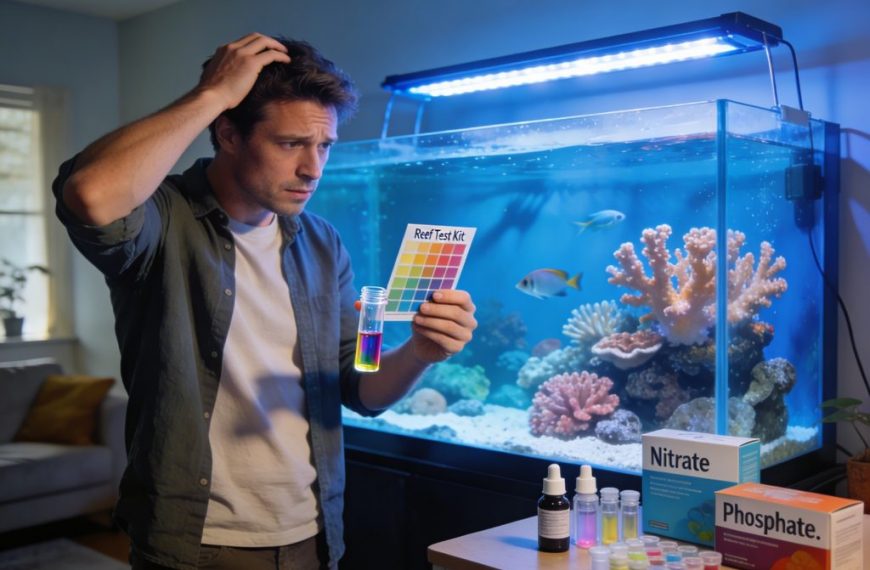
Good flow keeps a reef tank clean and stable. It also keeps corals fed and happy. Powerhead placement is the fastest way to improve results.
Start with goals and baseline flow targets
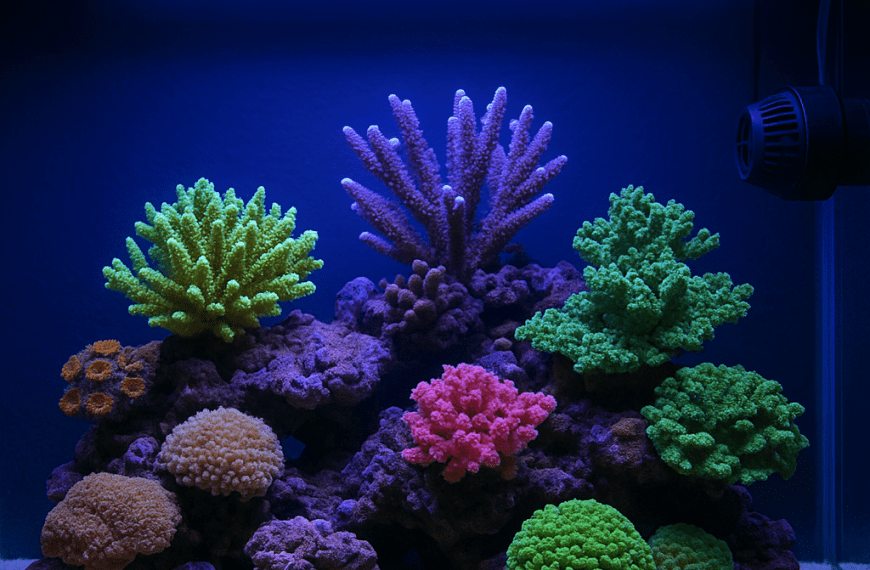
Pick a flow goal before you move anything. Soft corals prefer gentler, wider flow. Many LPS need moderate, indirect flow. Most SPS thrive with strong, changing flow.
Use turnover as a simple starting point. Aim for 20–30x per hour for mixed reefs. Aim for 30–50x per hour for SPS-heavy tanks. A 75-gallon SPS tank often needs 2,250–3,750 GPH total.
Think in patterns, not raw power. Random, alternating flow prevents dead spots. It also reduces tissue damage. A constant jet can peel flesh from LPS.
Watch your sand and coral response for feedback. Sand dunes mean the stream is too focused. Retracted polyps can mean too much direct blast. Detritus piles mean too little flow in that zone.
- Quick targets: Softies 10–20x, mixed 20–30x, SPS 30–50x.
- Good signs: gentle sway, clean rock, no settling in corners.
- Bad signs: bare sand patches, coral tissue recession, “snow globe” debris.
If you need a refresher on system-wide circulation, review reef tank flow basics. It helps you match pumps to livestock.
Placement patterns that work in real tanks
Start with two powerheads on opposite sides. Place them in the upper third of the glass. Angle them slightly upward to break the surface. This boosts gas exchange and stabilizes pH.
Aim for crossflow, not a straight line. Point each pump toward the front-center. Let the streams collide and spread. This creates chaotic flow without a harsh jet.
Use rockwork to your advantage. Place one powerhead to push behind the reef. Detritus often collects behind rocks and under shelves. A gentle back sweep keeps waste suspended for export.
For peninsula tanks, use a gyre-style pattern. Put one pump high on the overflow end. Put the second lower on the far end. Alternate them every few hours for direction changes.
- Keep pumps 3–5 inches below the surface to reduce vortexing.
- Start at 30–40% power, then increase 5% per day.
- Leave 2–4 inches clearance from rock to prevent cavitation noise.
Need help tuning nutrient export around flow? Pair this with protein skimmer tuning so suspended waste gets removed.
Tuning, testing, and troubleshooting common mistakes
Test flow with a “flake trail” and a turkey baster. Turn off return for two minutes. Blast detritus from rocks and watch where it settles. Adjust pumps to keep it moving toward the overflow.
Use modes that match your coral mix. Reef crest or random modes suit SPS. Pulse modes can help LPS if indirect. Avoid long, high-power pulses near euphyllia and brains.
Common mistake one is aiming at the sand bed. Raise the pump and widen the stream. Use a diffuser or lower peak power. Another mistake is ignoring the back wall. Add a small pump behind rock if needed.
Clean and recalibrate monthly. Coralline and snails reduce output fast. Soak wet parts in 1:1 vinegar and water for 20 minutes. Rinse well before reinstalling. If you see ich risk during changes, follow quarantine setup for reef fish for safer handling.
- Cyano on sand: increase crossflow and reduce dead zones near the front.
- Detritus behind rocks: angle one pump to sweep the back wall.
- LPS shrinking: reduce direct flow and add more randomness.
Document changes like a mini experiment. Move one pump at a time. Wait 48 hours before judging results. Corals need time to adjust their tissue and mucus layers.
Powerhead placement is part art and part testing. Start with clear targets and stable modes. Then fine-tune based on sand, detritus, and polyp behavior. With small changes, your reef will look cleaner and grow faster.
Sources: Delbeek & Sprung, The Reef Aquarium (Vol. 1–3); Borneman, Aquarium Corals; Riddle, articles on coral husbandry and water motion.
 By
By