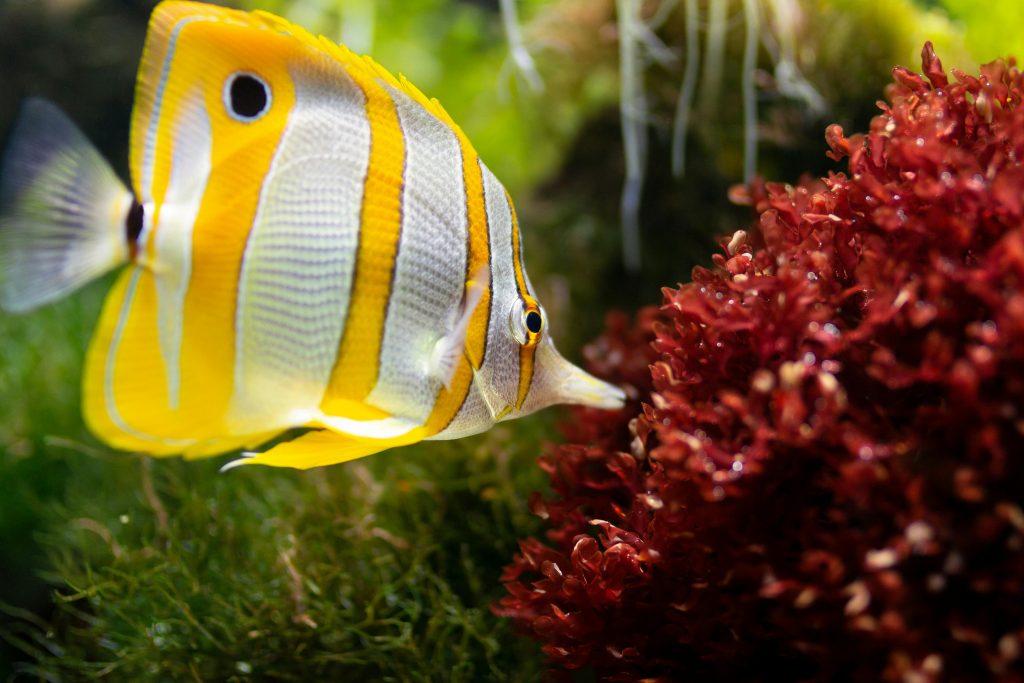
The Copperband Butterflyfish (Chelmon rostratus) is one of the most eye-catching and debated fish in the reef aquarium hobby. With its bold orange bands, long snout, and graceful swimming style, it’s often a centerpiece fish in larger marine tanks. However, this beauty comes with a reputation: Copperbands can be challenging to feed and acclimate, so they’re best suited to patient, prepared hobbyists.
Natural Behavior & Aquarium Requirements
In the wild, Copperband Butterflyfish spend their days picking at live rock, probing crevices for worms, small crustaceans, and other tiny invertebrates. Re-creating this environment in the home aquarium is essential to long-term success.
- Minimum tank size: 75 gallons, with 4 feet or more of swimming length.
- Temperament: Generally peaceful, but can be shy and easily stressed by aggressive tankmates.
- Reef safety: Often considered “reef with caution” — some individuals nip at feather dusters, aiptasia, and occasionally corals such as LPS and zoanthids.
- Environment: Mature live rock with plenty of caves, overhangs, and grazing surfaces.
Because they appreciate stable, clean water, Copperbands are a better fit for established systems with consistent parameters. If you’re still planning your setup, you may want to read our guide on building a stable reef tank from the start before adding delicate fish like this.
Feeding the Copperband Butterflyfish
Feeding is the single biggest challenge with Copperbands. Many arrive at local fish stores underfed and reluctant to accept prepared foods. A successful keeper focuses on variety, patience, and observation.
Foods They Commonly Accept
- Live blackworms or white worms (excellent for getting new specimens to eat)
- Fresh or frozen clams on the half shell
- Frozen mysis shrimp and enriched brine shrimp
- Finely chopped seafood mix (shrimp, squid, clam, mussel)
Tip: Start with enticing live foods, then gradually mix in frozen options. Target-feed near the rockwork where the fish feels secure.
Some Copperbands are famous for eating pest aiptasia anemones, but this should be seen as a bonus, not a guaranteed solution. Never buy one only for pest control. If you’re battling nuisance anemones or algae, consider pairing this fish with a solid cleanup crew and the strategies in our reef pest management guide.
Tankmates, Acclimation & Long-Term Care
Peaceful community fish are ideal companions. Avoid boisterous tangs, large wrasses, and aggressive angels that may outcompete or harass a Copperband.
- Acclimation: Use a slow drip acclimation and dim the lights for the first few hours.
- Quarantine: Strongly recommended; Copperbands can be sensitive to disease and sudden parameter changes.
- Observation: Watch for labored breathing, refusal to eat, or bullying from established fish.
- Supplemental feeding: Offer small meals 2–3 times daily until the fish is clearly maintaining weight.
Once settled, a healthy Copperband becomes a graceful, methodical grazer that adds movement and personality to the tank. For more stocking ideas that complement this species, see our article on best reef-safe fish for community tanks.
In summary, the Copperband Butterflyfish is not a beginner’s choice, but it rewards attentive care with truly unique behavior and beauty. Provide a mature, stable aquarium, a thoughtful feeding plan, and calm tankmates, and this iconic butterflyfish can thrive as a standout resident in your reef.
Sources
- Michael, S. (2001). Marine Fishes: 500+ Essential-To-Know Aquarium Species. Microcosm Ltd.
- Fenner, R. (2001). The Conscientious Marine Aquarist. TFH Publications.
- Sprung, J. (2005). Invertebrates: A Quick Reference Guide. Ricordea Publishing.
- Anecdotal reports and feeding experiences from long-term hobbyist forums and reef aquarium communities.
 By
By