A hospital tank protects your display tank. It also gives sick fish a calm place to recover. A simple setup works best and stays easy to clean.
Choose the right tank and equipment
Pick a bare-bottom glass tank. Use 10 to 20 gallons for small fish. Use 30 to 40 gallons for tangs and angels. More water stays stable and reduces stress.
Add a heater with a guard. Set 77 to 79°F. Use a simple HOB filter or sponge filter. Aim for 5 to 10 times turnover each hour. Add an air stone for extra oxygen.
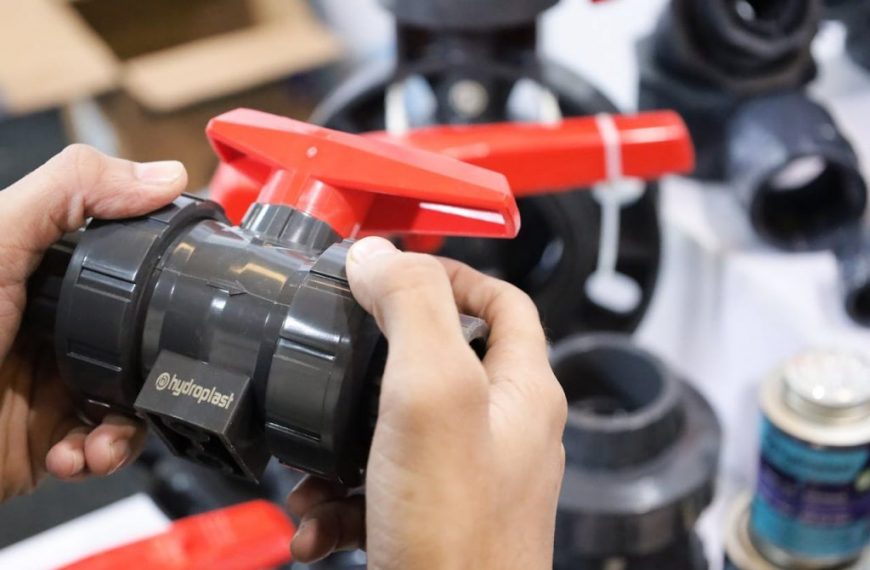
Skip sand and live rock. They trap waste and absorb meds. Use PVC elbows for hiding spots. Provide two pieces for small fish. Provide three to five for larger fish.
- Must-haves: heater, thermometer, sponge or HOB filter, air pump, lid
- Nice-to-have: ammonia badge, dimmable light, dedicated net and siphon
- Do not use: carbon during treatment, porous rock, shared tools with the display
Keep this tank separate from your reef gear. Cross contamination happens fast. Store supplies in a labeled bin. For planning, see quarantine tank basics.
Cycle, match parameters, and control ammonia
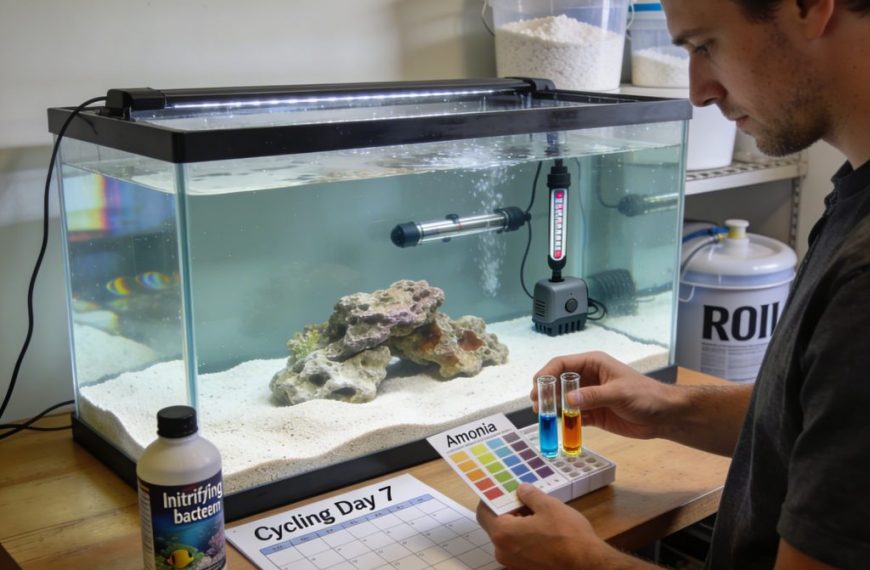
A hospital tank needs biological filtration. The easiest method is a seeded sponge filter. Keep one running in your sump at all times. Move it to the hospital tank when needed.
Match salinity and pH to the fish source. Most reef fish do well at 1.025 specific gravity. Keep pH near 8.1 to 8.3. If the store runs 1.020, match it first. Raise salinity by 0.001 per day.
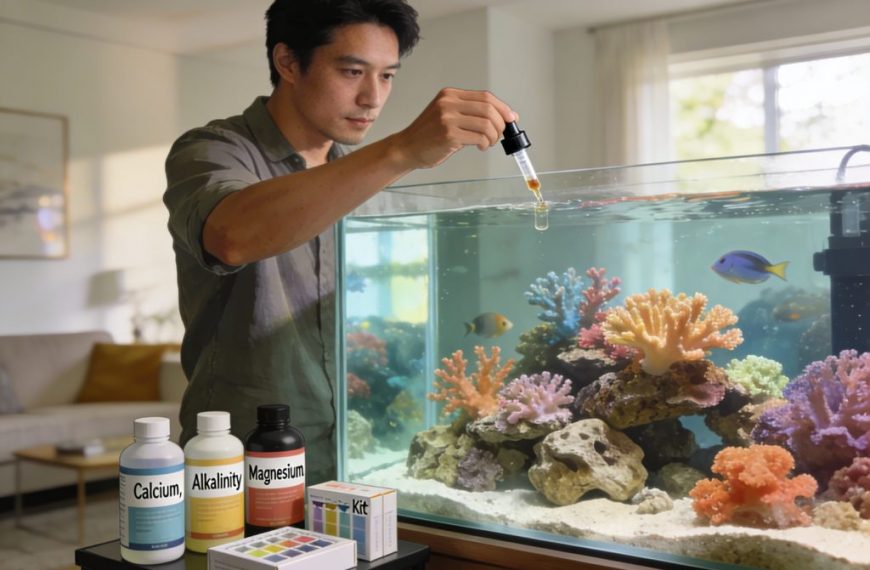
Test ammonia daily during treatment. Keep total ammonia under 0.25 ppm. Use water changes as your main control. Change 25% when ammonia rises. Use 50% if fish show rapid breathing.
Use a detoxifier only as a bridge. Some binders affect test results. They can also interact with certain medications. Read the medication label first. For step-by-step testing, review reef water parameter guide.
- Mix extra saltwater before you start treatment
- Use a dedicated bucket and heater for water changes
- Feed lightly to reduce waste during the first three days
Treatment workflow, observation, and common mistakes
Start with observation for 24 hours. Watch breathing, appetite, and swimming. Look for white spots, frayed fins, and cloudy eyes. Take photos under the same light each day. This helps you track changes.
Use medication only when you have a clear target. Copper treats ich and velvet in fish-only hospital tanks. Follow the brand’s therapeutic range. Many chelated coppers target 1.5 to 2.0 ppm. Test copper twice daily for the first two days.
Antibiotics can help with bacterial infections. Remove carbon and UV first. Increase aeration during antibiotics. Many drugs reduce oxygen and irritate gills. Keep the light dim to reduce stress.
Common mistakes cause most failures. The biggest is an uncycled filter. The second is mixing medications without guidance. Another is using rock that absorbs copper. If you need a full quarantine plan, see fish quarantine protocol.
- Troubleshooting fast breathing: check ammonia, raise aeration, verify temperature
- Troubleshooting no appetite: offer nori or mysis, reduce light, add more PVC cover
- Troubleshooting cloudy water: cut feeding, vacuum bottom, do a 30% water change
When symptoms stop, keep fish under observation. Hold them for 7 to 14 more days. This confirms recovery. Clean and dry the tank after use. Drying for 24 to 48 hours helps break many parasite cycles.
Sources: Humblefish Disease Forum (treatment ranges and protocols); Noga, “Fish Disease: Diagnosis and Treatment”; Fenner, “The Conscientious Marine Aquarist”.
 By
By