Setting up a reef tank is exciting, but the wall of gear can feel overwhelming. The good news: you don’t need every gadget on the market to keep coral and fish thriving. You need to understand the core pieces of reef tank equipment, what they do, and how to choose gear that matches your goals and budget.

Core Life-Support Equipment for a Reef Tank
Tank, Stand, and Sump
Your display tank and stand form the foundation. A level, sturdy stand prevents stress on glass seams, and a sump (a secondary tank below the display) quietly handles most filtration and equipment.
- Display tank: Choose reef-ready tanks with an overflow for easier plumbing.
- Stand: Ensure it’s rated for the full weight of the system, including water, rock, and sand.
- Sump: Adds water volume, hides equipment, and improves stability. Even a simple three-chamber sump (drain, skimmer, return) works well.
For a deeper breakdown of tank sizes and layout ideas, see our guide on beginner reef tank setup.
Filtration and Protein Skimmer
Reef tanks rely on a mix of biological, mechanical, and chemical filtration. Live rock handles most biological filtration, while equipment removes particles and excess nutrients.
- Protein skimmer: One of the most important tools. It removes dissolved organics before they break down into nitrate and phosphate.
- Mechanical filtration: Filter socks or cups catch detritus; rinse or replace them regularly.
- Chemical media: Activated carbon and phosphate removers can be run in a media reactor or a simple bag in the sump.
Pro tip: Size your skimmer slightly above your tank’s total water volume. An undersized skimmer often leads to algae and unstable water quality.
Lighting, Flow, and Temperature Control
Reef Lighting Basics
Corals depend on light for photosynthesis, so lighting is not the place to cut corners. Modern LED fixtures are popular for their controllability and efficiency.
- LEDs: Look for fixtures with proven reef spectrums, dimming, and timers.
- Mounting height: Usually 8–12 inches above the water for even coverage.
- Photoperiod: 8–10 hours of main light, with gentle ramp-up and ramp-down if possible.
Check our lighting comparison in this reef lighting guide before you commit to a fixture.
Water Movement and Pumps
Strong, random flow keeps detritus suspended, brings food and oxygen to corals, and prevents dead spots.
- Return pump: Moves water from the sump back to the display; aim for 3–5x display volume per hour.
- Powerheads/wavemakers: Create in-tank circulation. Many reefers target 20–40x tank volume per hour in total flow.
Pro tip: Aim powerheads at rockwork and surfaces, not directly at corals, to avoid tissue damage.
Heaters, Controllers, and Test Gear
Stable temperature and chemistry are just as important as lighting and flow.
- Heater: Use a quality, fully submersible unit; many hobbyists run two smaller heaters instead of one large one for redundancy.
- Controller or thermostat: An external controller adds a safety layer against heater failures.
- Test kits: At minimum, keep kits for salinity, temperature, ammonia, nitrate, alkalinity, calcium, and magnesium.
For a full checklist of maintenance tools and test kits, see our reef tank maintenance checklist.
Putting It All Together
Reef tank equipment doesn’t have to be complicated. Focus first on reliable life support: a solid tank and stand, a well-designed sump, a properly sized skimmer, stable lighting, strong but varied flow, and trustworthy heating and testing gear. Start with quality basics, learn how each piece affects your system, and upgrade only when your livestock or goals demand it. With the right foundation, your reef will reward you with long-term stability and growth.
Sources
- Sprung, J. & Delbeek, J.C. The Reef Aquarium, Vol. 1–3. Ricordea Publishing.
- Borneman, E. Aquarium Corals: Selection, Husbandry, and Natural History. TFH Publications.
- Paletta, M. The New Marine Aquarium. Microcosm Ltd.
- Bulk Reef Supply – educational articles and video series on reef equipment and husbandry.
Was this helpful?
Related Posts
Bristleworms
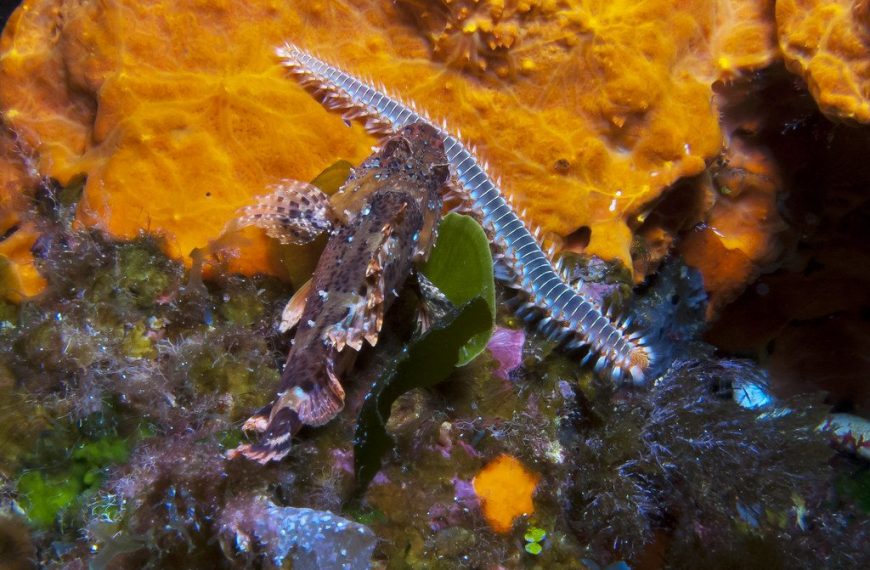
Bristleworms are usually helpful reef tank scavengers. Learn how to identify them, control numbers, and spot the rare…
 By
By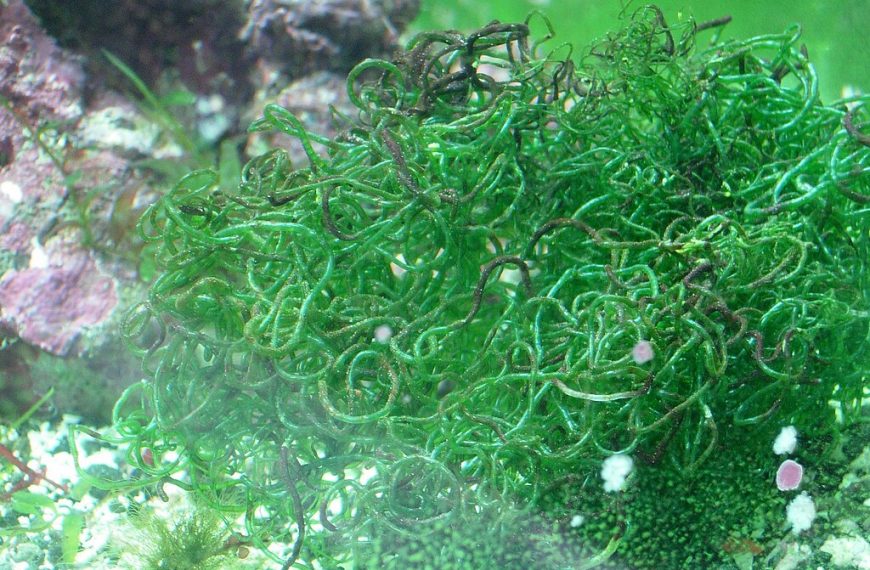
What is a Chaeto Reactor, and How Does it Help Control Nutrients?
A chaeto reactor grows macroalgae in a sealed chamber to remove nitrate and phosphate, helping reef tanks control…