Saltwater aquariums look complex at first. The basics are simple when you follow a plan. This guide covers the core steps for a stable, healthy tank.
Start with the right tank, gear, and salt mix
Pick a tank size that forgives mistakes. A 20–40 gallon tank works well. A 55–75 gallon tank is even steadier. Avoid tiny tanks under 10 gallons at first.
Use a quality heater and a thermometer you trust. Set temperature to 77–79°F. Add a powerhead for flow. Aim for 20–40x turnover in reef tanks. Fish-only tanks can run 10–20x.
Choose filtration based on your goal. Live rock plus a protein skimmer fits most tanks. A hang-on-back filter can help with carbon and floss. Plan for an auto top-off if you can. Evaporation swings salinity fast.
Mix salt with RODI water for consistent results. Target salinity at 1.025 specific gravity. That is about 35 ppt. Mix for 2–4 hours with heat and flow. Test with a calibrated refractometer. Hydrometers often drift.
- Buy a refractometer and calibrate with 35 ppt fluid monthly.
- Keep a spare heater on hand for emergencies.
- Use a lid or mesh top to reduce evaporation and jumps.
For deeper gear planning, see our reef tank equipment checklist. If you want a simple path, start with fish-only and add coral later.
Cycle the tank and lock in stable water parameters
Cycling builds bacteria that process waste. Add live rock or dry rock and sand. Dose an ammonia source to 2 ppm. Test ammonia, nitrite, and nitrate every 2–3 days. The cycle is complete when ammonia and nitrite hit 0 within 24 hours.
After cycling, do a large water change. Change 30–50% to reduce nitrate. Then set your baseline parameters. Keep pH at 8.0–8.4. Keep alkalinity at 8–9 dKH. Keep calcium at 400–450 ppm. Keep magnesium at 1250–1350 ppm.
Use a simple test routine. Test salinity and temperature daily at first. Test alkalinity twice weekly in reef tanks. Test nitrate weekly. Keep nitrate at 5–20 ppm for many mixed reefs. Keep phosphate at 0.03–0.10 ppm.
Stability matters more than chasing perfect numbers. Avoid big swings from rapid dosing. Make changes slowly over several days. If alkalinity drifts, adjust by no more than 1 dKH per day. If salinity is off, correct over 24–48 hours.
- Top off with fresh RODI water only. Never top off with saltwater.
- Mix new saltwater to match tank salinity within 0.001 SG.
- Log test results in a notebook or app for patterns.
Need help reading results? Use our reef water parameters guide for target ranges and fixes.
Add livestock safely and prevent common problems
Add fish slowly to avoid ammonia spikes. Start with one hardy fish in week one. Wait 10–14 days before the next fish. Feed lightly at first. Remove uneaten food after five minutes.
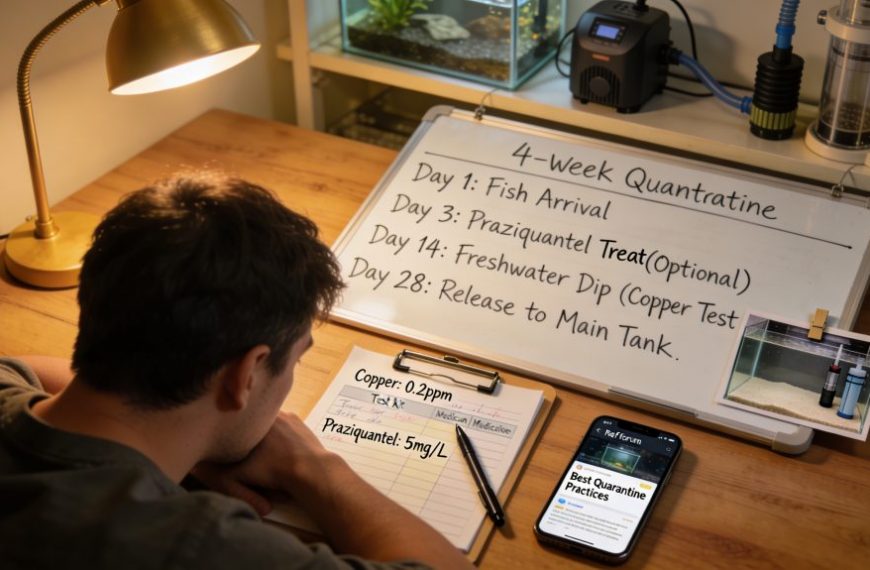
Quarantine prevents disease outbreaks. Use a 10–20 gallon bare tank. Add a sponge filter and heater. Observe new fish for 14–30 days. Watch for flashing, spots, and rapid breathing. Treat only when needed and with a plan.
Algae blooms are normal in young tanks. Brown diatoms often show up first. Green film algae follows. Reduce light to 6–8 hours if blooms surge. Keep nitrate and phosphate in range. Add a clean-up crew after the cycle. Start with 1 snail per 5 gallons as a baseline.
Common mistakes cause most crashes. Overfeeding is the top issue. Poor top-off habits cause salinity swings. Skipping maintenance lets detritus build up. Do 10–15% water changes weekly or 20% every two weeks. Clean filters and skimmer cups on schedule.
- Acclimate fish for 20–30 minutes. Match temperature and salinity.
- Use a timer for lights to prevent long photoperiods.
- Keep spare saltwater mixed for quick 10% changes.
For a step-by-step disease plan, read our quarantine protocol for saltwater fish. It can save your whole tank.
Saltwater aquarium basics come down to planning, patience, and stable parameters. Start with the right size tank and reliable tools. Cycle fully, add livestock slowly, and follow a simple maintenance routine.
Sources: Instant Ocean Sea Salt Guide; Red Sea Reef Care Program Foundation Parameters; TMC (Tropical Marine Centre) Marine Fish Health guidance; Randy Holmes-Farley, Reefkeeping Magazine chemistry articles.
 By
By