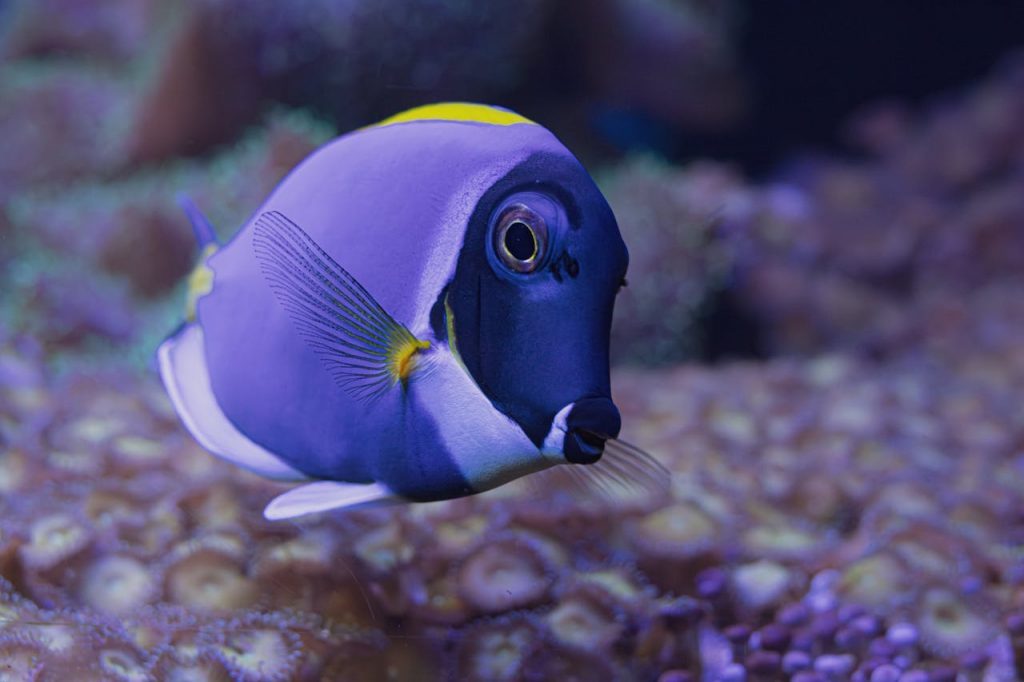
Tangs are bold, fast, and often territorial. Many reef keepers want more than one. The key is planning space, order, and species mix.
Start with tank size, layout, and a calm baseline
Most tang fights come from crowding and poor sight breaks. Aim for 4 to 6 feet of swimming length. A 75-gallon tank fits one small tang only. A 120-gallon tank suits one to two, with care.
Build rockwork with tunnels and multiple arches. Leave a clear “racetrack” in front. Use 1 to 1.5 pounds of rock per gallon as a rough guide. Add at least three distinct caves for each tang.
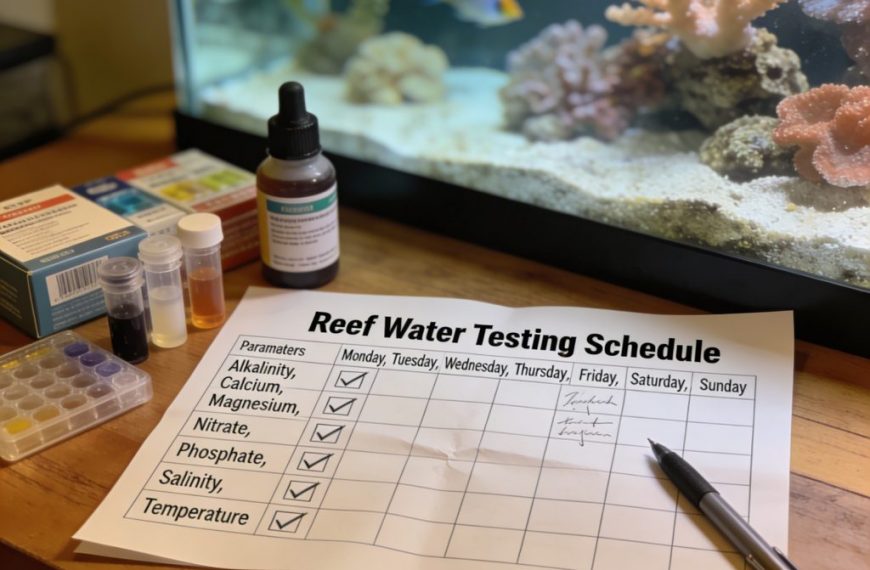
Stable water reduces stress and aggression. Keep salinity at 1.025 to 1.026 specific gravity. Hold temperature at 76 to 78°F. Keep pH 8.1 to 8.4 and alkalinity 8 to 9 dKH.
Nutrition also changes behavior. Feed algae daily and protein often. Hungry tangs pick fights and nip corals. Review reef tank feeding schedules before adding more fish.
- Use two algae clips at opposite ends of the tank.
- Target nitrate 5 to 15 ppm and phosphate 0.03 to 0.10 ppm.
- Run high flow zones, plus calmer “rest” areas behind rock.
Choose compatible tang groups and avoid common conflict pairs
Tangs fight hardest with similar body shapes. The worst match is often same genus, same size. Zebrasoma species may clash with other Zebrasoma. Acanthurus species can be even more intense.
Mixing different body profiles helps. A Yellow Tang with a Kole Tang is often easier. Bristletooth tangs (Ctenochaetus) focus on film algae. They can be calmer tankmates in mixed groups.
Size and maturity matter. Add the most aggressive tang last. Add the smallest tang first, if it is not fragile. Keep size gaps of 20 to 30% to reduce direct rivalry.
Real-world example helps. In a 180-gallon tank, a Kole Tang plus a Yellow Tang often works. Add the Kole first and let it settle for four weeks. Add the Yellow next, with heavy feeding that week.
- Avoid two Acanthurus in tanks under 180 gallons.
- Avoid same-species pairs unless the tank is very large.
- Prefer one “sailfin shape” and one “oval shape” mix.
Add tangs safely: quarantine, introduction tactics, and troubleshooting
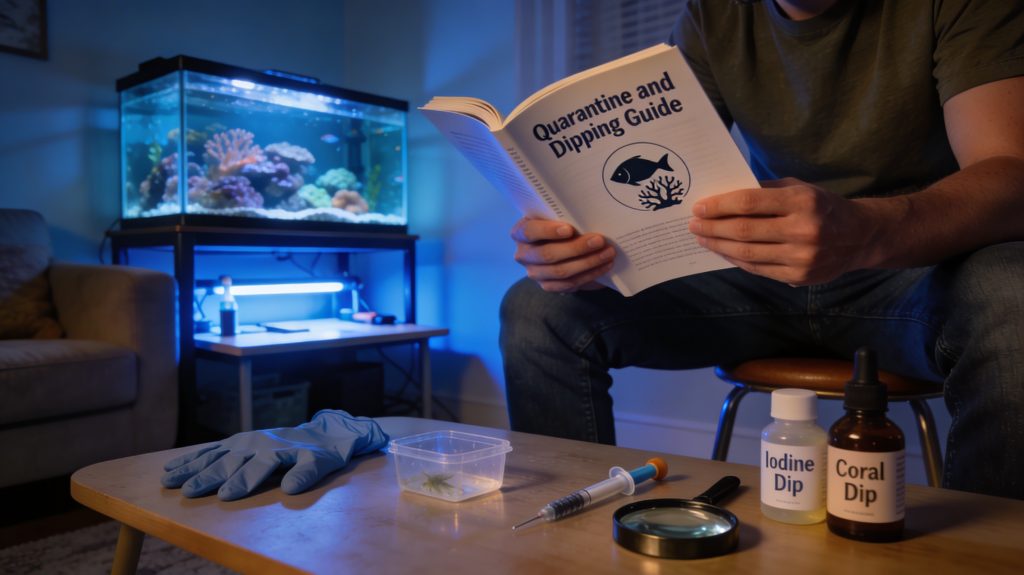
Quarantine reduces disease and stress. Run a 20 to 40 gallon QT for 30 days. Match salinity and temperature to the display. Watch for ich, velvet, and bacterial sores.
Use introduction tools to cut aggression. An acclimation box for 3 to 7 days works well. A mirror on the glass can distract bullies for 24 to 48 hours. Rearrange a few rocks right before release.
Feed heavy during the first week. Offer nori twice daily and frozen once daily. Soak foods in vitamins twice weekly. Keep the lights slightly dim for the first day after release.
Act fast when fights start. Torn fins and constant chasing are red flags. Separate the aggressor for 3 to 7 days in a breeder box. If the victim stops eating, move it to QT.
- Use a fish trap and plan removal before adding new tangs.
- Keep spare algae sheets ready for “peace feeding” sessions.
- Check for lateral line erosion and improve diet if seen.
For deeper planning, compare species needs in tang tank size requirements. If parasites worry you, follow marine fish quarantine setup steps.
Good tang compatibility is not luck. It is space, structure, and smart timing. Choose mixed shapes, feed well, and add fish in the right order. You will get calmer fish and better color long term.
Sources: Scott W. Michael, “Marine Fishes”; Fenner, “The Conscientious Marine Aquarist”; Hemdal, “Diseases of Marine Fishes”.
 By
By