RODI water is the foundation of a stable reef tank. It removes impurities that drive algae and stress fish. This guide shows how to make, test, and maintain it with confidence.
Why RODI matters for reef tanks
Tap water can carry nitrate, phosphate, and silicate. Those fuels can trigger hair algae and diatoms. Tap water can also contain copper from plumbing. Copper can harm inverts at very low levels.
RODI stands for reverse osmosis and deionization. The RO membrane removes most dissolved solids. The DI resin then polishes what remains. Your goal is consistent zero-TDS product water.
A good target is 0 ppm TDS at the final output. Many hobbyists accept 1–2 ppm for mixing salt. That can still add unwanted nutrients over time. For sensitive SPS and shrimp, aim for true zero.
Stable source water makes stable saltwater. It also makes top-off safer. Evaporation leaves salts behind. Top-off must be fresh water only. RODI prevents slow parameter drift.
- Mix salt with 0 TDS water for repeatable salinity and alkalinity.
- Use RODI for ATO to avoid rising phosphate and nitrate.
- Keep a log of TDS, pressure, and filter change dates.
For more setup basics, see our reef tank startup checklist. It helps you plan water, rock, and cycling steps.
Choosing and setting up an RODI unit
Most reef keepers do well with a 4 to 6 stage unit. A common layout is sediment, carbon, RO membrane, then DI. Add a second carbon stage if you have chloramines. Add a second DI stage for extra safety.
Pressure matters for membrane performance. Aim for 60–80 psi at the unit inlet. Below 50 psi, production drops and TDS creep rises. Use a booster pump if your home pressure is low.
Temperature also changes output. Ratings assume about 77°F (25°C). Cold water makes less water per hour. Do not use hot water. It can damage the membrane and release more impurities.
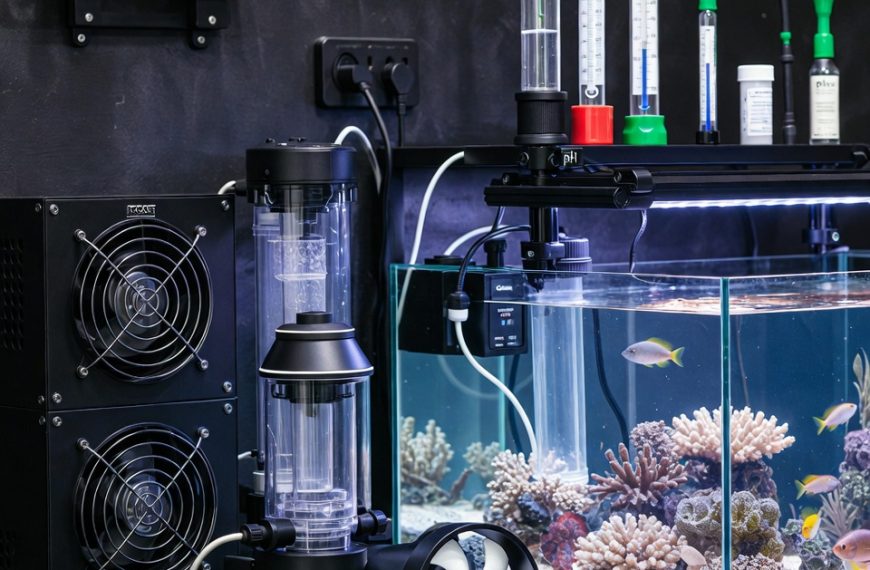
Install an inline TDS meter with two probes. Place one after the RO membrane. Place the second after the DI stage. This shows membrane rejection and DI exhaustion separately. Add a pressure gauge if your unit lacks one.
- Flush the membrane for 3–5 minutes before collecting water.
- Discard the first 1–2 gallons after long idle periods.
- Store product water in food-safe containers with tight lids.
When you start mixing salt, match salinity with a calibrated refractometer. Use 35 ppt as a common reef target. Calibrate with 35 ppt solution, not RO water. Our salinity calibration guide walks through the steps.
Testing, maintenance, and troubleshooting
Change schedules depend on your water and usage. Sediment filters often last 3–6 months. Carbon blocks often last 6 months in average homes. Replace sooner if chlorine breaks through. Chlorine can ruin a membrane quickly.
Watch RO rejection rate, not just final TDS. Use this quick check: (tap TDS − RO TDS) ÷ tap TDS. Aim for 96–99% rejection on a healthy membrane. Example: 300 tap and 10 RO equals 96.7%.
DI resin is the final polish. Replace it when post-DI reads 1 ppm TDS. Some resins exhaust fast with high CO2. If DI burns out quickly, aerate RO water for 24 hours. Then send it through DI again.
Common problems have simple fixes. Low output often means low pressure or clogged sediment. Rising post-RO TDS points to carbon failure or an aging membrane. Channeling in DI can happen if resin is packed loosely.
- If post-DI reads 2–5 ppm, stop collecting and change DI resin.
- If RO TDS jumps, test for chlorine and replace carbon blocks.
- If output is slow, check pressure and replace the sediment filter.
RODI water supports stable nutrients, too. Poor source water can mask real issues. If you fight algae, confirm your inputs first. See our phosphate control guide for a practical plan.
Sources: SpectraPure RO/DI basics and troubleshooting guides; Bulk Reef Supply RODI education series; Randy Holmes-Farley, Reefkeeping Magazine articles on water quality and purification.

 By
By