An ammonia spike can turn a stable saltwater tank into an emergency fast. Fish can gasp, corals can close, and bacteria can crash. This guide helps you find the cause and fix it with clear steps.
Confirm the spike and stabilize the tank
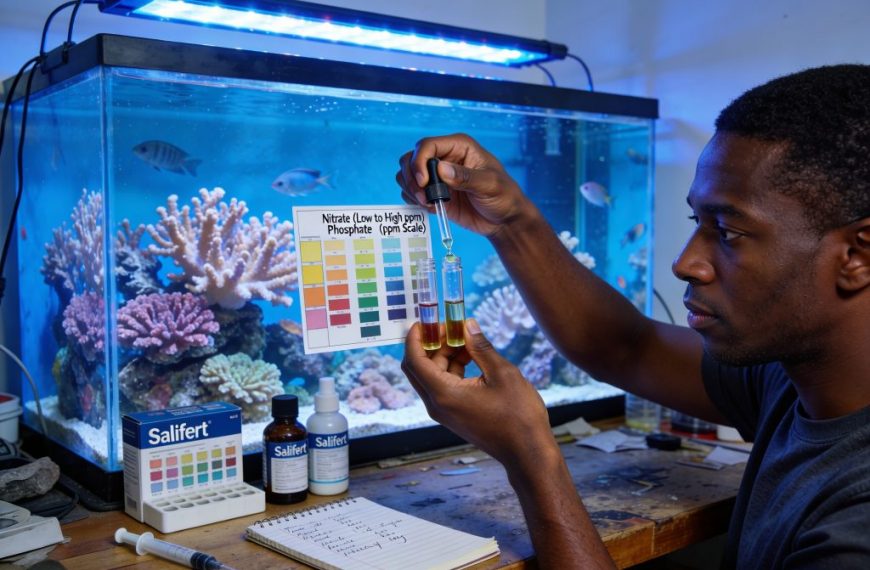
First, confirm the reading with a second test. Use a fresh liquid kit, not old strips. Test total ammonia and, if possible, free ammonia. Free ammonia is the toxic form.
Check pH and temperature right away. Higher pH and higher heat increase ammonia toxicity. Aim for 77–79°F and pH 8.0–8.3 during the event. Avoid sudden swings while you correct the problem.
Next, protect livestock while you troubleshoot. Add strong aeration and surface agitation. Ammonia damages gills and reduces oxygen uptake. Point a powerhead at the surface and clean clogged filter socks.
Use an ammonia binder if fish are in danger. Dose per label for total water volume. Retest after 30–60 minutes. Some kits read bound ammonia as positive. Note the product used in your log.
- Stop feeding for 24–48 hours to reduce waste input.
- Do a 25–50% water change with matched salinity and temperature.
- Run fresh activated carbon to remove organics and toxins.
If you need a quick checklist, review our reef tank water change guide. It covers mixing, heating, and matching salinity. Good technique prevents a second stress event.
Find the root cause: where the ammonia is coming from
Most spikes come from sudden added bioload or lost filtration. Think about the last 72 hours. Did you add fish, corals on dirty plugs, or new live rock? A new fish can double waste output in small systems.
Dead or decaying material is another common trigger. Check behind rockwork for a missing fish or snail. Inspect the overflow, sump, and filter socks for trapped food. A single dead shrimp can spike a 20–40 gallon tank.
Filter disruptions also matter. Rinsing biomedia in tap water can kill bacteria fast. Turning off the return pump for hours can suffocate bacteria in a sealed sump. Replacing all media at once removes the biofilter you relied on.
Also check test and dosing mistakes. Ammonia can appear after overdosing amino acids or carbon sources. Some dechlorinators can skew readings if used heavily. If the tank is new, the simplest cause is an incomplete cycle.
- Look for a “missing” animal and remove it with tongs or a net.
- Vacuum detritus from bare spots and sump corners during the water change.
- Review any recent equipment changes, especially filtration and pumps.
Quarantine reduces surprise spikes in display tanks. Our saltwater fish quarantine setup article explains simple, low-stress methods. It also helps you avoid adding disease during a recovery period.
Recovery plan: rebuild nitrification and prevent a repeat
Once livestock is stable, rebuild the biofilter. Add a reputable nitrifying bacteria product for saltwater. Dose for the full system volume, including sump. Keep skimmer and UV off for 24 hours if the label says so.
Monitor ammonia and nitrite twice daily for three days. Target total ammonia at 0.00 ppm. Keep nitrite low with water changes if it rises. In marine tanks, chloride reduces nitrite toxicity, but stress still adds up.
Feed lightly once ammonia stays at zero for 24 hours. Start with half rations for two days. Remove uneaten food after five minutes. Use frozen foods that are rinsed to cut phosphate and dissolved organics.
Prevent repeats with small, steady changes. Add no more than one fish every 2–4 weeks in most reefs. Keep 1–2 spare filter socks and rotate them. If you use media reactors, change media in stages, not all at once.
- Keep salinity stable at 1.025–1.026 specific gravity during recovery.
- Maintain alkalinity 8–9 dKH and avoid large pH corrections.
- Log test results, livestock changes, and maintenance dates.
If you are cycling or re-cycling, read our how to cycle a reef tank guide. It explains timelines and safe stocking. A stable cycle is your best defense.
Ammonia spikes are scary, but they are usually fixable. Confirm the reading, protect oxygen levels, and dilute the toxin fast. Then remove the source and rebuild bacteria so the tank stays stable.
Sources: SeaChem Ammonia Alert and Prime documentation; API Saltwater Master Test Kit instructions; Tetra SafeStart and Dr. Tim’s nitrifying bacteria product guides; Delbeek & Sprung, The Reef Aquarium (nitrification fundamentals).

 By
By