Dialing in nutrient control is one of the biggest keys to a thriving reef tank. Too many nutrients and you battle algae and dull coral color; too few and your corals starve, lose tissue, or stop growing. Finding that sweet spot for nitrate and phosphate will keep your reef stable, colorful, and far easier to maintain over the long term.
Understanding Nitrates and Phosphates in Reef Tanks
In most reef aquariums, we focus on two main nutrients: nitrate (NO3) and phosphate (PO4). They’re produced from fish waste, uneaten food, and the natural breakdown of organics. Rather than chasing zero, modern reef keeping aims for controlled levels:
- Nitrate: ~2–15 ppm for mixed reefs; 2–10 ppm for SPS-heavy systems
- Phosphate: ~0.02–0.10 ppm, depending on coral type and lighting intensity
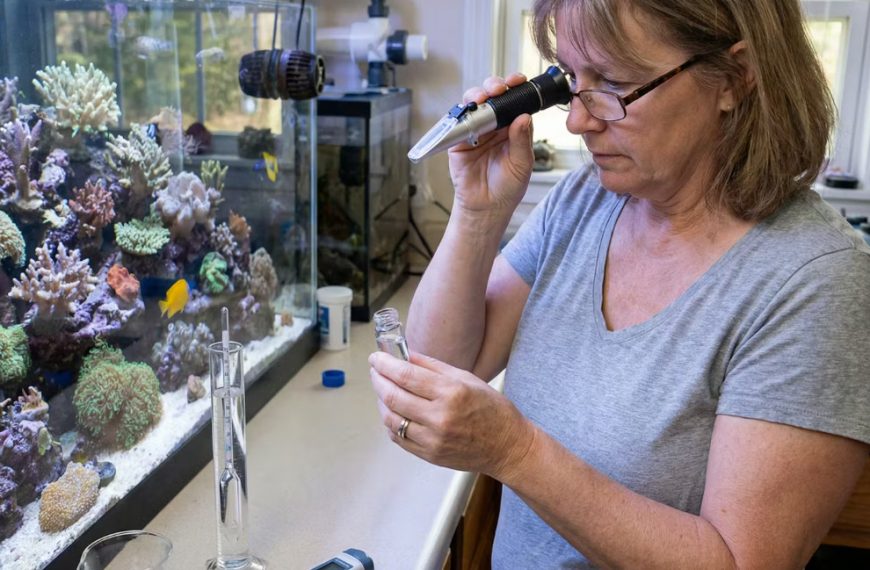
Stable numbers in these ranges help corals color up, keep algae manageable, and maintain healthy bacterial populations. Use a reliable test kit or digital checker and log results weekly. If you’re new to testing, see our guide on reef tank testing basics for step-by-step tips.
Practical Ways to Control Nutrients
Effective nutrient control is about balance, not constant correction. Combine several of these methods for a stable, low-maintenance system.
1. Smart Feeding and Stocking
- Feed smaller amounts more often: Only what fish consume in 30–60 seconds.
- Rinse frozen foods: Thaw and strain to remove nutrient-heavy juices.
- Avoid overstocking: Too many fish overwhelm your biological and mechanical filtration.
If your nitrate and phosphate are climbing weekly, feeding is the first place to adjust.
2. Mechanical and Biological Filtration
- Protein skimmer: A properly sized, well-tuned skimmer removes dissolved organics before they become nitrate and phosphate.
- Filter socks or rollers: Change socks every 2–3 days, or use a roller mat for automatic export.
- Live rock and bio-media: Provide surface area for nitrifying and denitrifying bacteria to process waste.
For help choosing gear, check our overview of reef tank filtration options and how they fit different tank sizes.
3. Refugiums, Macroalgae, and Chemical Media
- Refugium with macroalgae: Chaetomorpha grown under a strong refugium light can steadily pull nitrate and phosphate from the water. Harvest it weekly to physically export nutrients.
- GFO or phosphate-removing media: Use in a reactor or media bag to gently lower phosphate. Start with a small amount to avoid shocking corals.
- Carbon dosing (vodka, vinegar, or commercial blends): Encourages bacteria to consume nitrate and phosphate, which are then removed by your skimmer. Increase doses slowly and monitor closely.
Tip: If you run both a refugium and chemical media, adjust gradually. Dropping nutrients too fast can pale corals and destabilize the system.
Troubleshooting Common Nutrient Problems
High nutrients with algae outbreaks? Increase export (better skimming, more frequent water changes, clean detritus from the sump) and slightly reduce feeding. Manual algae removal helps speed up the turnaround.
Ultra-low nutrients and pale corals? Consider feeding more, reducing GFO, or shortening refugium light time. Some reefers even dose small amounts of nitrate or phosphate to avoid bottoming out.
Above all, make one change at a time and give your tank a week or two to respond. Slow, measured adjustments are safer than chasing numbers day to day. For a broader look at keeping your system steady, read our article on reef tank stability tips.
Dialed-in nutrient control turns a frustrating, algae-ridden tank into a vibrant, predictable reef. By testing regularly, feeding thoughtfully, and combining natural and mechanical export methods, you’ll keep nitrate and phosphate in that healthy zone where corals thrive and maintenance feels manageable.
Sources
- Holmes-Farley, R. (2002–2010). Reef chemistry articles. Reefkeeping Magazine.
- Borneman, E. (2001). Aquarium Corals: Selection, Husbandry, and Natural History. TFH Publications.
- Sprung, J., & Delbeek, J. (1994–2005). The Reef Aquarium Vol. 1–3. Ricordea Publishing.
 By
By