
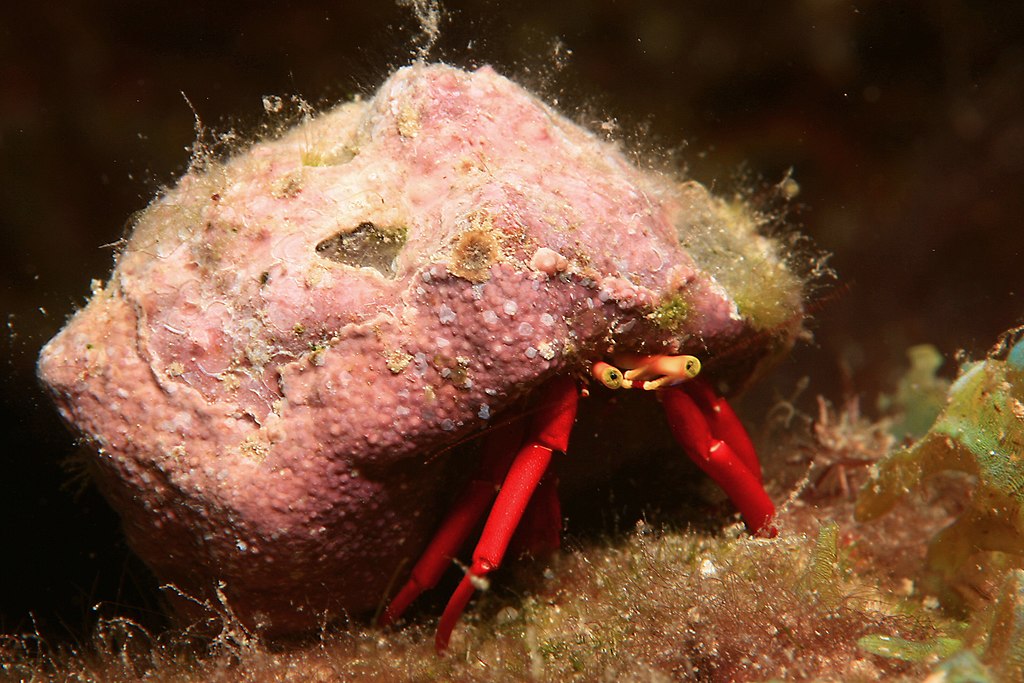
Scarlet reef hermit crabs (Paguristes cadenati) are popular reef-safe scavengers. They stay small, look bright, and help manage leftover food. They still need planning, since they can fight over shells and food.
What they do in a reef tank
Scarlet reef hermits work best as part of a mixed clean-up crew. They pick at detritus, film algae, and uneaten food. They also graze on some nuisance algae. They will not “solve” algae alone.
Adults often reach about 2.5 cm (1 inch) in body size. They are active but not fast swimmers. They spend most time on rock and sand. Their red legs and yellow face stand out under blue light.
Temperament is usually peaceful for a hermit. Trouble starts when shells are scarce. Hunger can also trigger bullying of snails or other hermits. You can prevent most issues with food and spare shells.
Stocking should be conservative. Try 1 hermit per 10 gallons as a starting point. In a 40-gallon breeder, start with 3–4. Add more only if you still see detritus buildup.
- Expect help with detritus, film algae, and leftover pellets.
- Plan for shell swaps as they grow.
- Use them to support, not replace, good husbandry.
Care basics: parameters, feeding, and shells
Keep reef-stable parameters. Aim for salinity 1.025–1.026, temperature 24–26°C (75–79°F), and pH 8.1–8.4. Maintain alkalinity 8–9 dKH and calcium 400–450 ppm. Keep nitrate 2–15 ppm and phosphate 0.03–0.10 ppm.
Acclimate slowly to avoid osmotic shock. Use drip acclimation for 45–60 minutes. Match salinity within 0.001 before release. Avoid exposing them to air for long periods.
Feed them on purpose, even in “dirty” tanks. Offer a tiny sinking pellet or wafer 3–4 times per week. Add a thumbnail-sized piece of nori once weekly. In newer tanks, target feed near their hiding spots.
Shell supply is the biggest success factor. Provide 3–5 empty shells per hermit. Mix openings and sizes. Turbo, trochus, and nassarius-style shells work well. Rinse shells and place them in a small pile.
- Drip acclimate 45–60 minutes for best survival.
- Offer 3–5 spare shells per crab to reduce fights.
- Feed small amounts 3–4 times weekly to protect snails.
Compatibility, common mistakes, and troubleshooting
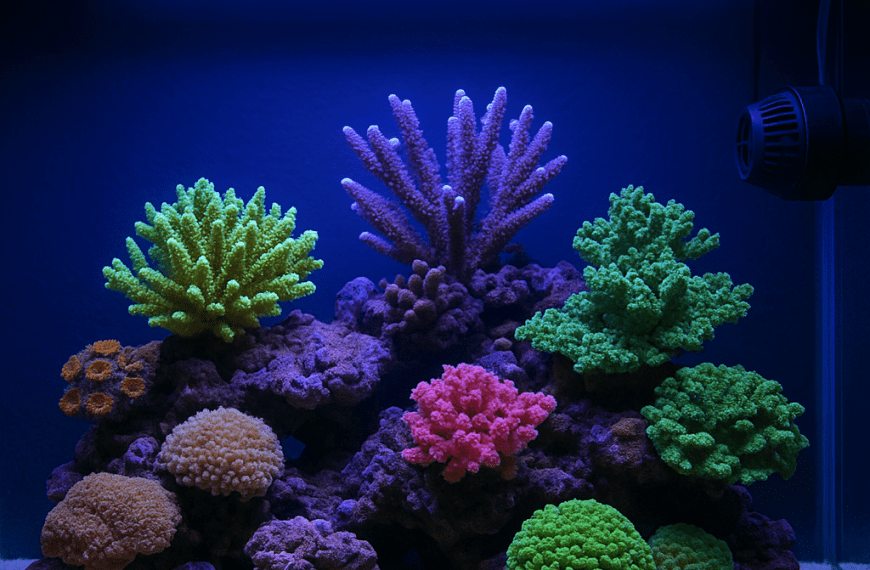
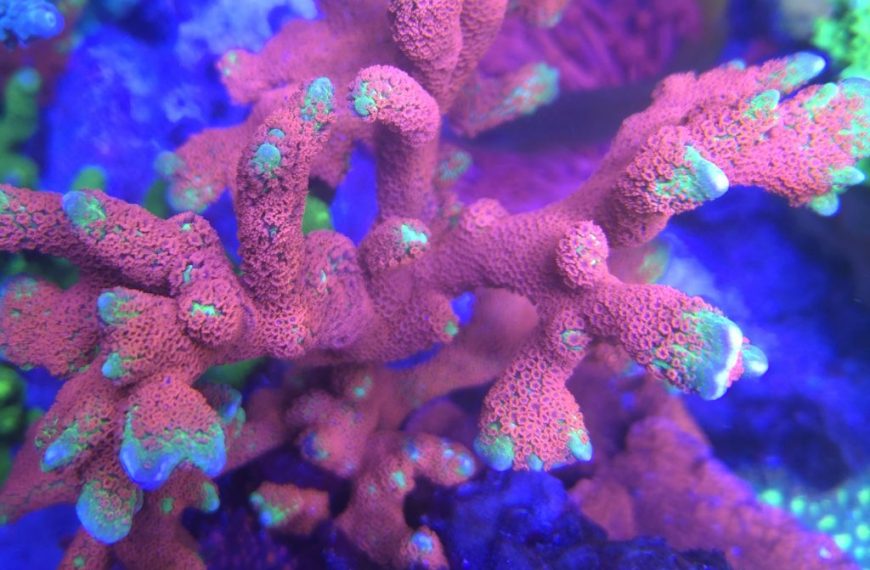
Scarlet reef hermits are usually safe with corals. They can still knock frags loose. Secure frags with putty or gel. Avoid placing loose rubble near the glass, since they climb and tumble.
They can live with most peaceful fish and shrimp. Avoid housing them with aggressive crabs. Large hawkfish may pick at them. Some wrasses flip snails, which can create chaos at feeding time.
Snail deaths often get blamed on hermits. The real cause is often starvation or salinity swings. Test salinity with a calibrated refractometer. Keep top-off consistent. If you see hermits harassing snails, add shells and increase feeding.
Watch for molting stress. A fresh molt looks pale and soft. Do not remove the shed shell. They often eat it for minerals. If you see repeated failed molts, check iodine is not being overdosed. Focus on stable salinity and alkalinity instead.
- If snails vanish, add spare shells and feed more often.
- If they fall often, secure frags and reduce loose rubble.
- If molts fail, stabilize salinity and alkalinity before dosing.
For more clean-up crew planning, see our clean-up crew guide. If algae is your main issue, review reef tank algae control. For safer acclimation routines, use our drip acclimation steps.
Scarlet reef hermit crabs are hardy when you meet simple needs. Give them stable parameters, purposeful feeding, and plenty of shells. Do that, and they become colorful, useful workers in almost any reef.
Sources: Borneman, Eric H. Aquarium Corals (TFH); Fenner, Robert. The Conscientious Marine Aquarist (TFH); Calfo, Anthony & Fenner, Robert. Reef Invertebrates (TFH).
 By
By
.jpg)