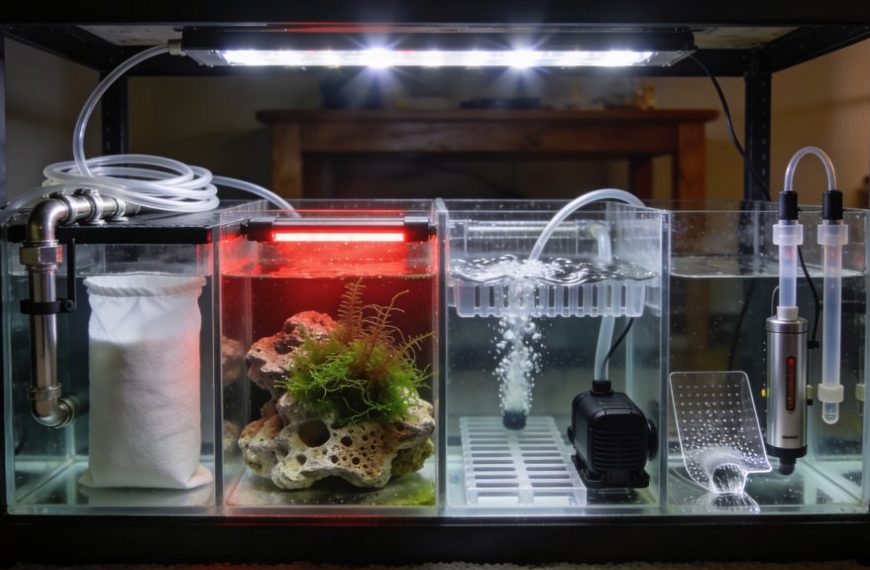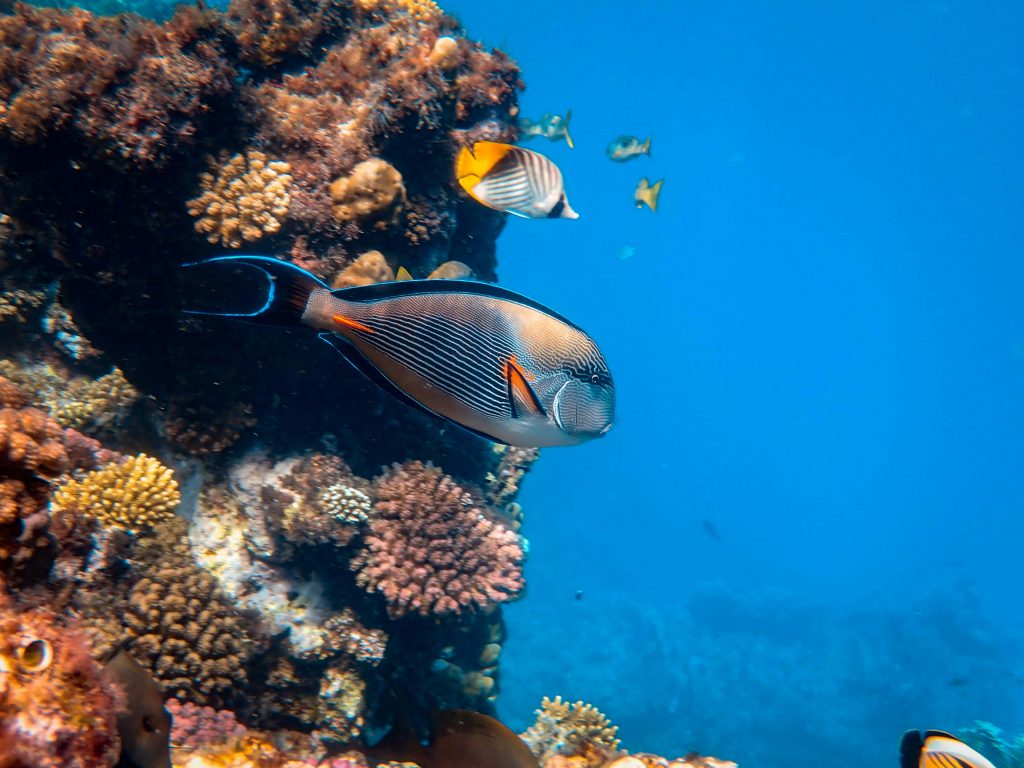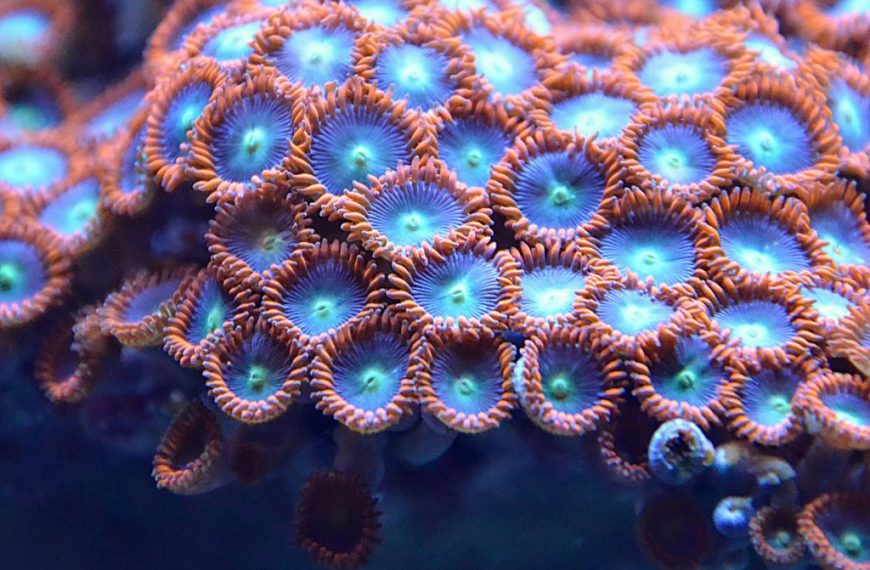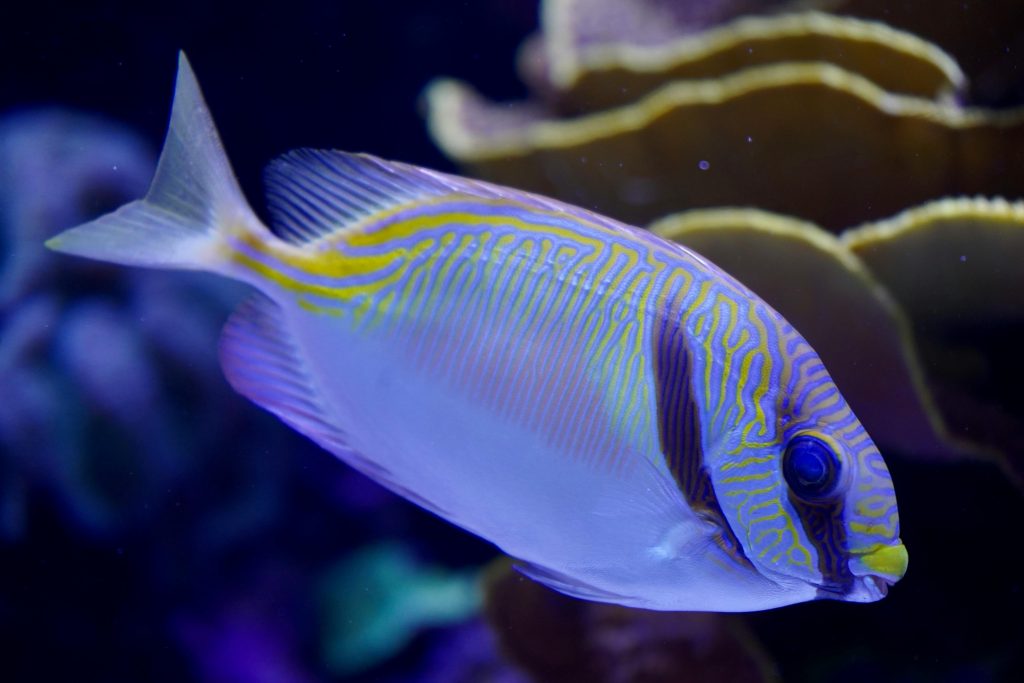
Jumping fish are common in saltwater tanks. Evaporation and salt creep are also daily realities. Aquarium lids and mesh screens help you control both without hurting gas exchange.
Why lids matter in reef and fish-only tanks
The main job of a lid is jump prevention. Wrasses, gobies, dartfish, and tangs can launch fast. A one-inch gap is enough for escape. A lid also reduces splashes from wavemakers and return nozzles.
Lids change evaporation rates. Many tanks lose 0.5 to 2.0% volume daily. A lid can cut that by 20 to 50%. That helps stabilize salinity. It also reduces top-off demand and ATO cycling.
Heat and oxygen are the trade-offs. Solid lids trap warm, humid air. That can raise temperature by 0.5 to 2.0°F. They can also reduce surface agitation. That can lower pH at night in tight homes.
Think about your equipment layout. Hanging lights need clearance. Rimless tanks need neat edges. If you run a protein skimmer, you want good gas exchange. Mesh screens often balance these needs well.
- Assume every fish can jump during feeding or chasing.
- Cover all cutouts around pipes and cables.
- Keep at least 1/2 inch clearance from hot light fixtures.
Mesh screens vs solid lids: choosing the right cover
Mesh screens are the reef default. Use 1/4 inch clear mesh for most fish. It blocks jumps but passes light. It also allows strong gas exchange. That helps keep pH steadier with heavy bioloads.
Solid lids include glass and acrylic. Glass is scratch resistant and stays flat. It also blocks less light than old plastic. Acrylic is lighter but scratches easily. Both will collect salt creep fast in high-flow tanks.
Light loss is real with solid lids. Salt film can cut PAR quickly. Clean glass weekly in reef tanks. In SPS systems, even a small drop can matter. Mesh usually needs less frequent cleaning.
Condensation is another difference. Solid lids drip back into the tank. That can add noise and salt spray. Mesh dries faster and stays cleaner. If your room is very dry, solid lids can reduce humidity issues.
- Choose 1/4 inch mesh for wrasses, clowns, and tangs.
- Use 1/8 inch mesh for tiny firefish and juvenile gobies.
- Avoid metal window screen. It can corrode in salt air.
Build, fit, and maintain a cover that works
Start with a tight fit. Measure inside the rim or the outer glass edge. Aim for gaps under 1/8 inch. Add small flaps around return lines. Many escapes happen at the overflow corner.
Plan for feeding and maintenance. A hinged section saves time. A removable screen is also fine. Just make it easy to lift with one hand. If it is annoying, you will leave it off.
Watch for warning signs after installing a lid. Rising temperature means trapped heat. Increase fan cooling or lower heater setpoint by 0.5°F. If pH drops, increase surface agitation. You can also review your water parameters and aeration.
Clean on a schedule. Rinse mesh monthly with warm tap water. Wipe salt creep from frames weekly. For glass, use vinegar and a soft pad. Avoid soaps. Always dry the lid before reinstalling.
- Target 77 to 79°F for most reef tanks, with minimal daily swing.
- Keep salinity stable at 1.025 to 1.026 with reliable top-off.
- After changes, observe fish at lights-out for jumping behavior.
If you still get jump attempts, reduce stress triggers. Add more rock caves and shaded zones. Feed smaller meals twice daily. Quarantine new fish to avoid aggression outbreaks. See our quarantine tank setup guide for help.
Conclusion
Aquarium lids and mesh screens are cheap insurance. They prevent losses and reduce mess. Choose the cover that matches your fish, lighting, and airflow needs, then keep it clean.
Sources: Borneman, Eric H. “Aquarium Corals.” 2001; Delbeek, J. Charles & Sprung, Julian. “The Reef Aquarium, Vol. 1–3.” 1994–2005; Fenner, Robert. “The Conscientious Marine Aquarist.” 2001.
 By
By