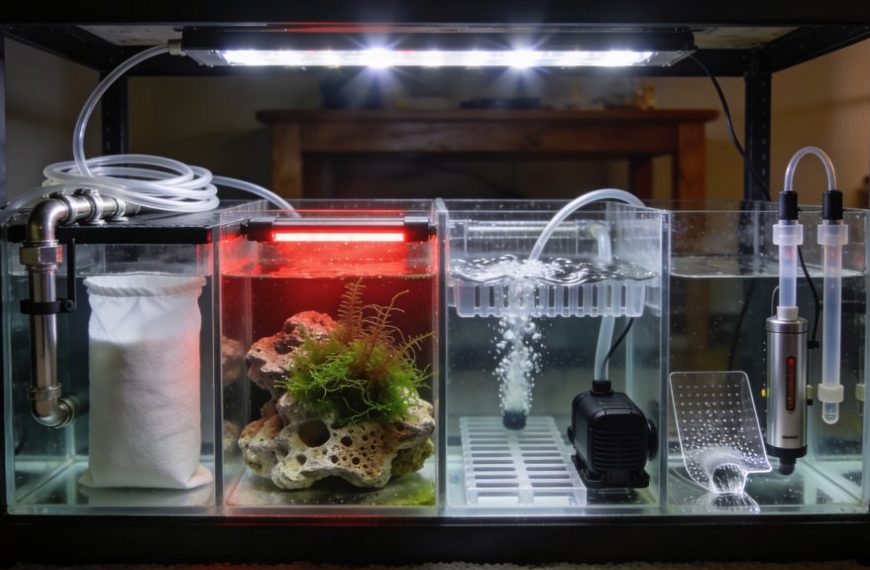
Cycling is the first test of patience in reefkeeping. It builds the bacteria that detoxify fish waste. Do it right and your tank starts stable.
What “cycling” means and what you need
A saltwater cycle grows two main bacterial groups. One converts ammonia to nitrite. Another converts nitrite to nitrate. This prevents toxic spikes once livestock arrives.
Start with mixed saltwater at 1.025 specific gravity. Keep temperature at 77–79°F. Run strong flow and aeration. Bacteria need oxygen to work well.
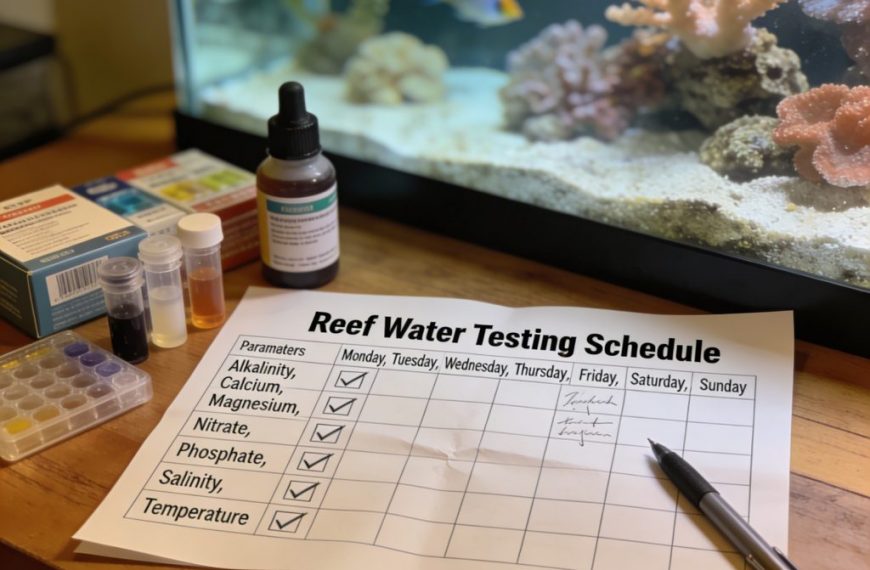
Use reliable test kits for ammonia, nitrite, and nitrate. Many hobbyists also track pH and alkalinity. Aim for pH 8.0–8.3 and alkalinity 8–10 dKH. Stability matters more than chasing numbers.
- Heater and thermometer, set to 78°F
- Powerheads for surface agitation and gas exchange
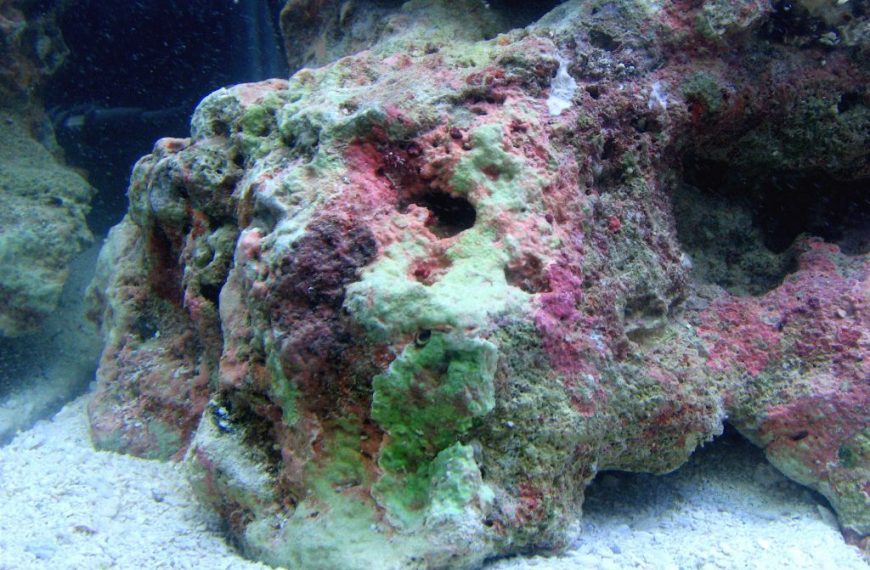
- Ammonia source, plus live rock or dry rock
- Test kits: NH3/NH4, NO2, NO3
- Optional: bottled bacteria to speed results
If you are planning a reef, pick your rock strategy now. Live rock can cycle faster but may bring hitchhikers. Dry rock is clean but often cycles slower. For setup details, see our saltwater aquarium setup checklist.
Step-by-step fishless cycle (the safest method)
Day 1: Add sand and rock. Fill with saltwater and start all pumps. Turn on the heater. Keep lights off to limit early algae. Add bottled bacteria if you use it.
Add an ammonia source to feed bacteria. Target 2.0 ppm total ammonia nitrogen. Use pure ammonium chloride if possible. If you use fish food, add a small pinch daily. Expect slower and messier results.
Test every 2–3 days at first. Ammonia should rise, then fall. Nitrite will spike next. Nitrate rises last. The cycle is close when ammonia hits 0 ppm within 24 hours of dosing.
Confirm the finish with a “stress test.” Dose ammonia back to 1.0–2.0 ppm. If ammonia and nitrite both read 0 ppm after 24 hours, the biofilter is ready. Then do a 25–50% water change to reduce nitrate.
- Goal endpoint: 0 ppm ammonia, 0 ppm nitrite, nitrate present
- Typical timeline: 14–45 days, depending on rock and bacteria
- After cycling: keep nitrate under 20–40 ppm for fish-only
Once cycled, add livestock slowly. Start with one hardy fish or a small clean-up crew. Feed lightly for the first week. This prevents overwhelming new bacteria. For stocking pace, read how to add fish to a new saltwater tank.
Common problems and how to fix them
Stalled cycles are common with low oxygen or cold water. Check surface agitation first. Increase flow and point a powerhead at the surface. Verify temperature stays near 78°F all day.
High nitrite can linger for weeks in some systems. Keep testing, but do not panic. In saltwater, nitrite is less toxic than in freshwater. Still, wait for 0 ppm before adding fish. If nitrite stalls, add a second dose of bottled bacteria and reduce ammonia dosing.
Do not do large water changes during the early cycle. It can slow progress by reducing ammonia “food.” Small top-offs are fine. Use fresh RO/DI water for evaporation. Keep salinity stable within 0.001 specific gravity.
Algae blooms can start before the cycle ends. Keep lights off or very low. Run a skimmer if you have one. Add a small bag of activated carbon if water smells. After cycling, manage nutrients with consistent feeding and export. See our nitrate control guide.
- Mistake: adding fish to “test” the tank. Fix: use a fishless ammonia source.
- Mistake: chasing pH daily. Fix: focus on alkalinity and gas exchange.
- Mistake: overdosing ammonia above 4–5 ppm. Fix: dilute with a water change.
When the cycle is complete, keep bacteria fed. If the tank will sit empty, add 0.5–1.0 ppm ammonia weekly. You can also ghost feed a tiny pinch twice per week. This prevents a weak biofilter before your first fish.
Sources: Hovanec & DeLong (1996) nitrifying bacteria in aquaria; Spotte (1979) “Seawater Aquariums”; Timmons & Ebeling (2013) “Recirculating Aquaculture.”
 By
By