Reef fish do not sleep like people. They rest in short cycles and use safe spots. Knowing these patterns helps you reduce stress and prevent losses.
What “sleep” looks like in reef fish
Most reef fish enter a low-activity state at night. Their breathing slows and their colors may fade. Many fish hover in place or wedge into rockwork. Some species lie on the sand and look “down.”
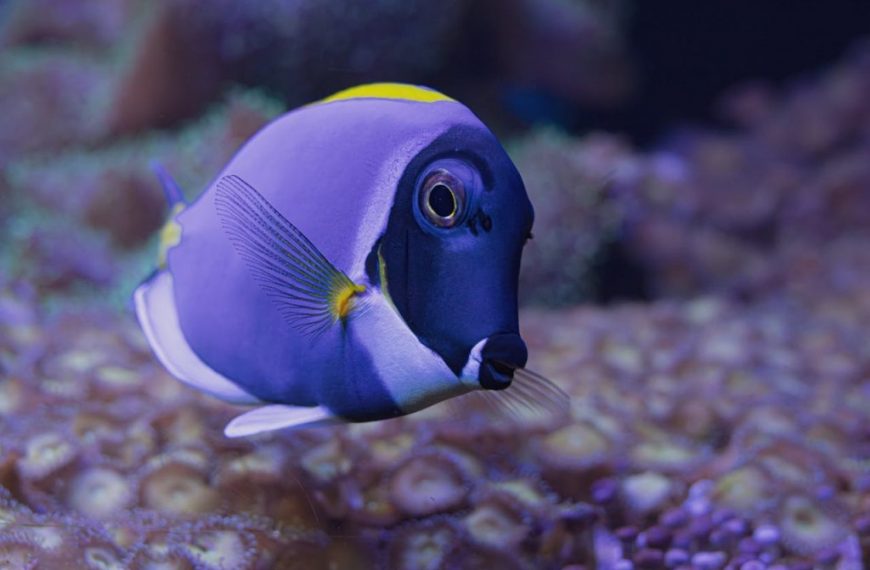
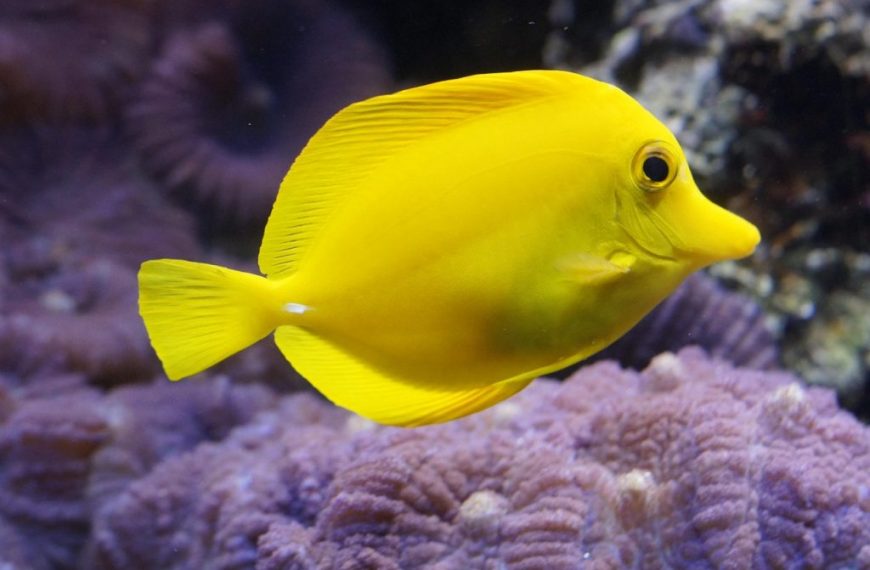
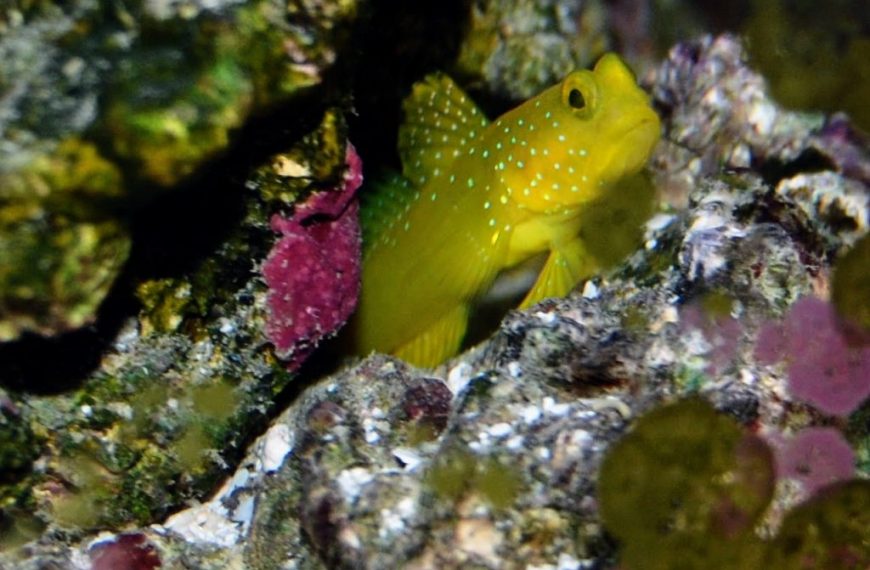
Sleep behavior depends on body shape and predators. Wrasses and parrotfish often bury in sand or hide deep. Clownfish hover near their host area and reduce movement. Tangs pick a crevice and “park” there each night.
Light drives most of the schedule. A stable photoperiod helps fish anticipate night. Aim for 8–10 hours of full light for many reefs. Add a 30–60 minute ramp if you use dimming LEDs.
Common “sleep” signs are easy to spot. The fish reacts slower to you. It may ignore food right at lights-out. It should still breathe evenly and hold balance.
- Expect reduced activity 15–30 minutes after lights dim.
- Look for a consistent resting spot each night.
- Watch gill rate for sudden spikes or gasping.
Set up the tank for safe nighttime resting
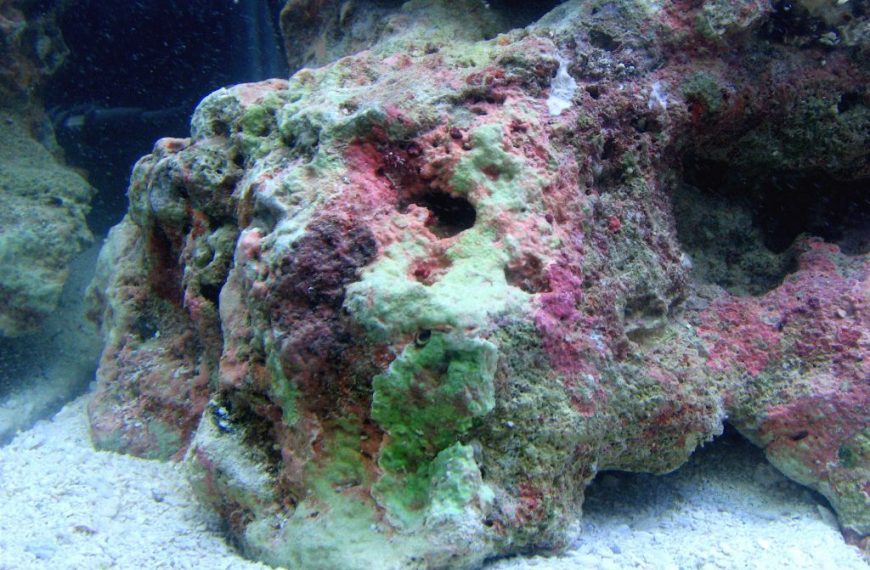
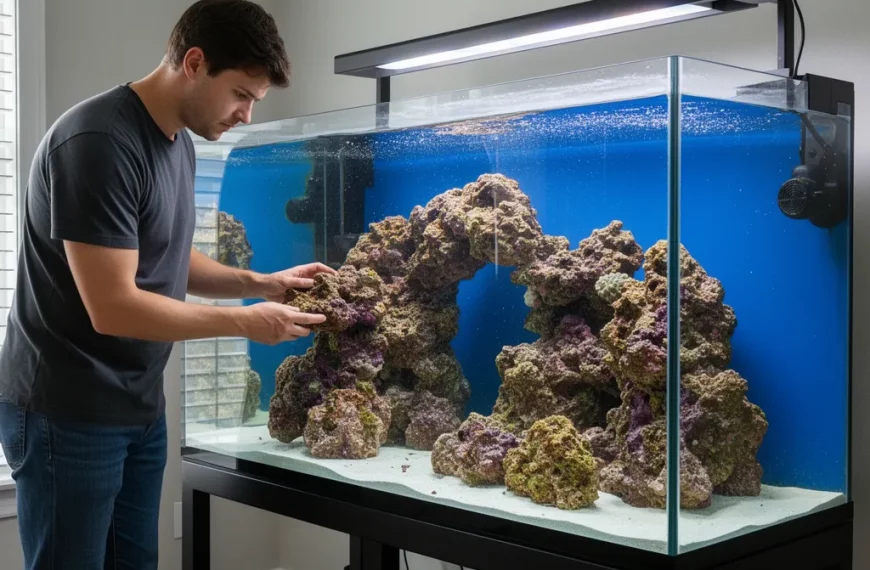
Resting fish need cover and calm flow zones. Build rockwork with caves and ledges. Leave at least two distinct hideouts per fish. This reduces nighttime bullying.
Match the habitat to the species. Sand-sleeping wrasses need 2–3 inches of fine sand. Use 0.5–1.5 mm grain size when possible. Avoid sharp crushed coral that can injure their scales.
Keep oxygen high during the dark period. Photosynthesis stops at night. Fish and bacteria still consume oxygen. Target dissolved oxygen with strong surface agitation and stable temperature.
Use practical parameter targets to prevent stress. Keep temperature at 24–26°C (75–79°F). Hold salinity at 1.025–1.026 specific gravity. Maintain pH 8.0–8.3 and alkalinity 8–9 dKH.
- Run a gentle night mode on wavemakers if your fish gets pinned.
- Use a tight lid for jumpers like wrasses and firefish.
- Limit bright room lights after tank lights turn off.
For more on planning rockwork, see reef aquascaping basics. If you keep sand sleepers, review choosing sand for reef tanks.
Troubleshooting odd sleep behavior and common mistakes
Some “sleep” behavior is actually distress. Rapid breathing at night can signal low oxygen. Check surface rippling and skimmer air intake. Consider adding an airstone in emergencies.
Flashing and scratching after lights-out can suggest parasites. Ich and velvet often worsen with stress. Quarantine new fish for 30 days when possible. Use a separate tank with hiding PVC and stable salinity.
Nighttime aggression is common in tight tanks. Damsels and dottybacks may guard caves. Add more rock breaks and line-of-sight blocks. Rearranging rock can reset territories, but do it carefully.
Sudden light changes also cause panic and jumping. Avoid instant on and off. Use a short blue-only period before full darkness. If you need a night check, use a dim red flashlight.
- If a fish sleeps on its side, verify it is a known sand sleeper.
- If it cannot right itself, test ammonia and check for injury.
- If it hides all day, review bullying and nitrate levels.
Learn more about stable routines in reef tank lighting schedule. Consistency often fixes “mystery” nighttime issues.
Reef fish sleeping behavior is normal and predictable. Provide secure shelters, steady lighting, and strong oxygenation. When you know what to expect, you can spot true problems fast.
Sources: Fenner, R. (2001) The Conscientious Marine Aquarist; Michael, S. (2008) Marine Fishes; Borneman, E. (2001) Aquarium Corals.
 By
By