Nutrient control keeps reefs colorful and stable. Too much nitrate or phosphate fuels algae. Too little can starve corals and bacteria.
Start with targets and steady testing
Pick a realistic nutrient range for your tank type. Mixed reefs often do well at 2–15 ppm nitrate. Many systems run best at 0.03–0.10 ppm phosphate. Avoid chasing zero. Corals need some nitrogen and phosphorus.
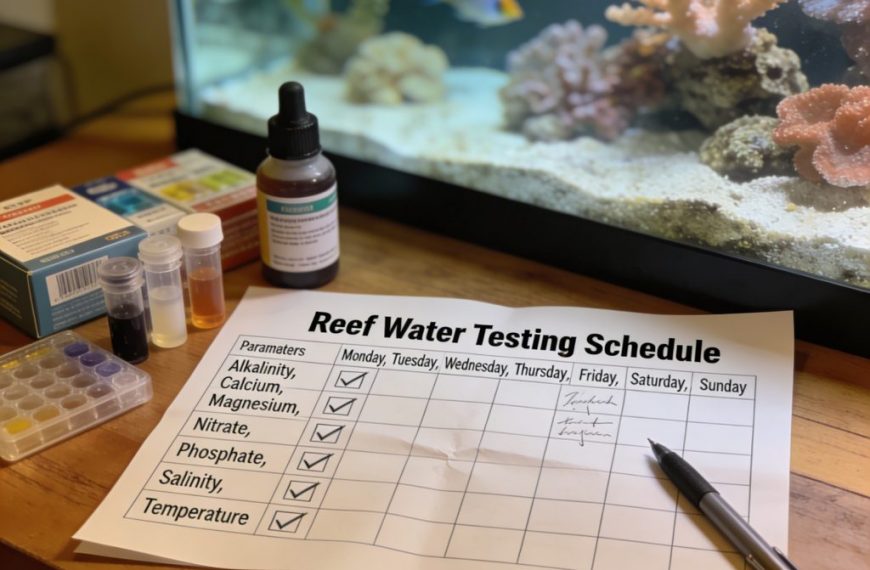
Test on a schedule and log results. Test nitrate twice weekly in new tanks. Test phosphate twice weekly when algae is active. Once stable, test weekly. Use the same brand kit for consistency.
Watch trends, not single numbers. A 0.02 ppm phosphate swing can stress some SPS. A 5 ppm nitrate jump can trigger algae blooms. Make changes slowly. Adjust one variable at a time.
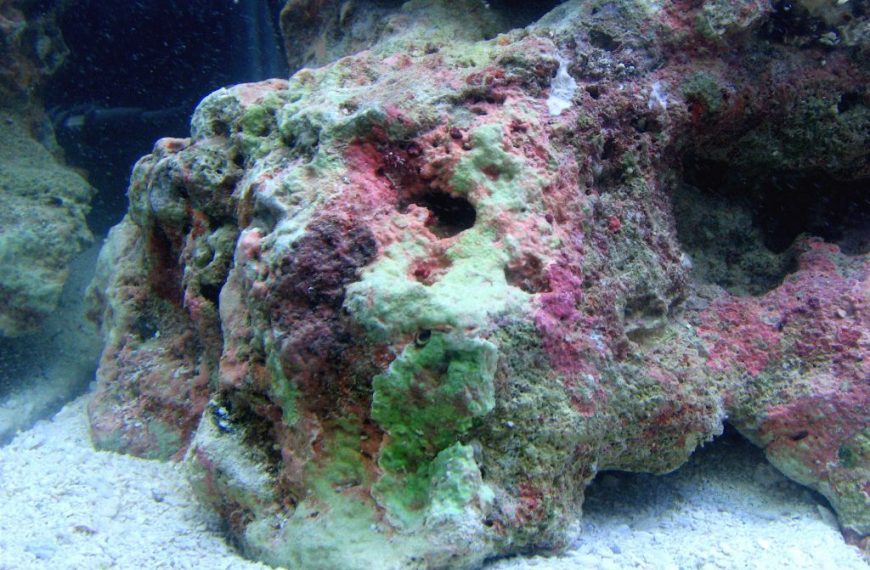
Use visual cues to confirm your tests. Dark, stringy film suggests excess nutrients. Pale corals can signal low nutrients or too much export. Cross-check with alkalinity stability. Read more in reef tank water parameters.
- Write down nitrate, phosphate, alkalinity, and feeding amounts each test day.
- Aim for changes under 10% per week for nitrate and phosphate.
- Re-test 24 hours after any media change or dosing adjustment.
Control inputs: feeding, stocking, and detritus
Most nutrients enter through food. Feed fish what they eat in 30–60 seconds. For frozen foods, thaw and strain the pack juice. That juice adds phosphate fast. Split feeding into two small meals daily.
Stocking density sets your baseline load. A heavy fish list needs strong export. Add fish slowly and observe nutrient drift for two weeks. If nitrate climbs 2–3 ppm per week, plan more export. If phosphate climbs 0.03 ppm per week, reduce inputs first.
Detritus is hidden nutrient storage. It breaks down into nitrate and phosphate. Vacuum a third of the sand bed weekly. Blow rocks with a turkey baster before water changes. Clean filter socks every 2–3 days.
Use smart mechanical filtration. A roller mat can cut dissolved nutrients over time. A skimmer pulls organics before they decay. Set the skimmer for dark tea skimmate, not clear water. Learn skimmer tuning in protein skimmer setup guide.
- Rinse frozen food and reduce pellet dust before feeding.
- Remove uneaten nori after 2–3 hours to limit decay.
- Clean pumps and overflows monthly to prevent detritus traps.
Control exports: water changes, media, and biology
Water changes are the safest export tool. Start with 10% weekly for mixed reefs. For high nutrients, do 15% weekly for four weeks. Match salinity within 0.001 specific gravity. Match temperature within 1°F.
Use phosphate media when phosphate stays high. GFO works well but can strip too fast. Start with 25–50% of the suggested dose. Test phosphate after 48 hours. Replace media when phosphate stops dropping.
Carbon dosing can reduce nitrate and phosphate together. Start very small and increase weekly. Watch for bacterial blooms and low oxygen. Run a strong skimmer and good surface agitation. Stop dosing if water turns cloudy.
Refugiums and algae scrubbers export nutrients biologically. Use a 12–16 hour light cycle for macroalgae. Harvest a fist-sized clump every 1–2 weeks. If macro stops growing, check iron and phosphate. Keep nitrate above 2 ppm for steady growth. For deeper nutrient balancing, see refugium for reef tank.
- If nitrate is high but phosphate is low, feed more or reduce GFO.
- If phosphate is high but nitrate is low, increase export and reduce rich foods.
- When algae spikes, increase clean-up and shorten white light hours by 1–2.
Stable nutrients beat perfect numbers. Make small changes and confirm with testing. With steady inputs and reliable export, your reef will stay clean and vibrant.
Sources: Randy Holmes-Farley, “Nitrate in the Reef Aquarium”; Randy Holmes-Farley, “Phosphate and the Reef Aquarium”; Julian Sprung, “The Reef Aquarium” (nutrition and filtration sections).
 By
By